
Fast, Reliable Chimney Liner & Rebuild Across Lancaster
Chimney liner replacement and rebuild in Lancaster, NY typically runs $2,800–$7,500 depending on scope, and most projects are completed in one to two days. If your Lancaster home’s original clay tile liner is cracking or your chimney crown is spalling from years of lake-effect snow, waiting only drives the cost higher. We’re Titan Chimney Cleaning Greater Buffalo, and Thomas Hernandez shows up personally on every Chimney Liner & Rebuild call we make to Lancaster. From the brick ranches along Pavement Road to the Cape Cods near Como Park Boulevard, we know the 14086 zip’s housing stock because we’ve spent 11 years working inside these exact chimneys. Call (833) 632-3568 for a free estimate—most Lancaster homeowners get same-week scheduling.
Why Titan Chimney Cleaning Greater Buffalo Is Lancaster’s Preferred Chimney Liner & Rebuild Company
Nearly 300 homeowners have trusted us across Greater Buffalo, and Lancaster represents a significant share of our liner and rebuild work. Our 297 verified reviews average 4.7 stars, with Lancaster customers specifically citing Thomas Hernandez’s willingness to explain what he found on camera and why it mattered. When you call us from Lancaster, you’re not getting routed through a dispatch center or handed off to a rotating subcontractor—you’re talking to Thomas, who will be the same person climbing your roof and running the inspection.
Our response time to Lancaster is typically same-day or next-day for urgent liner failures, and we schedule standard rebuild consultations within a week. We know the difference between a ranch on Harris Hill Road and a colonial near Lancaster High School, and we know both likely share the same underlying problem: original clay tile liners engineered for a different era of heating. That local fluency saves time on every job.
Our Chimney Liner & Rebuild Services in Lancaster
Stainless Steel Liner Installation
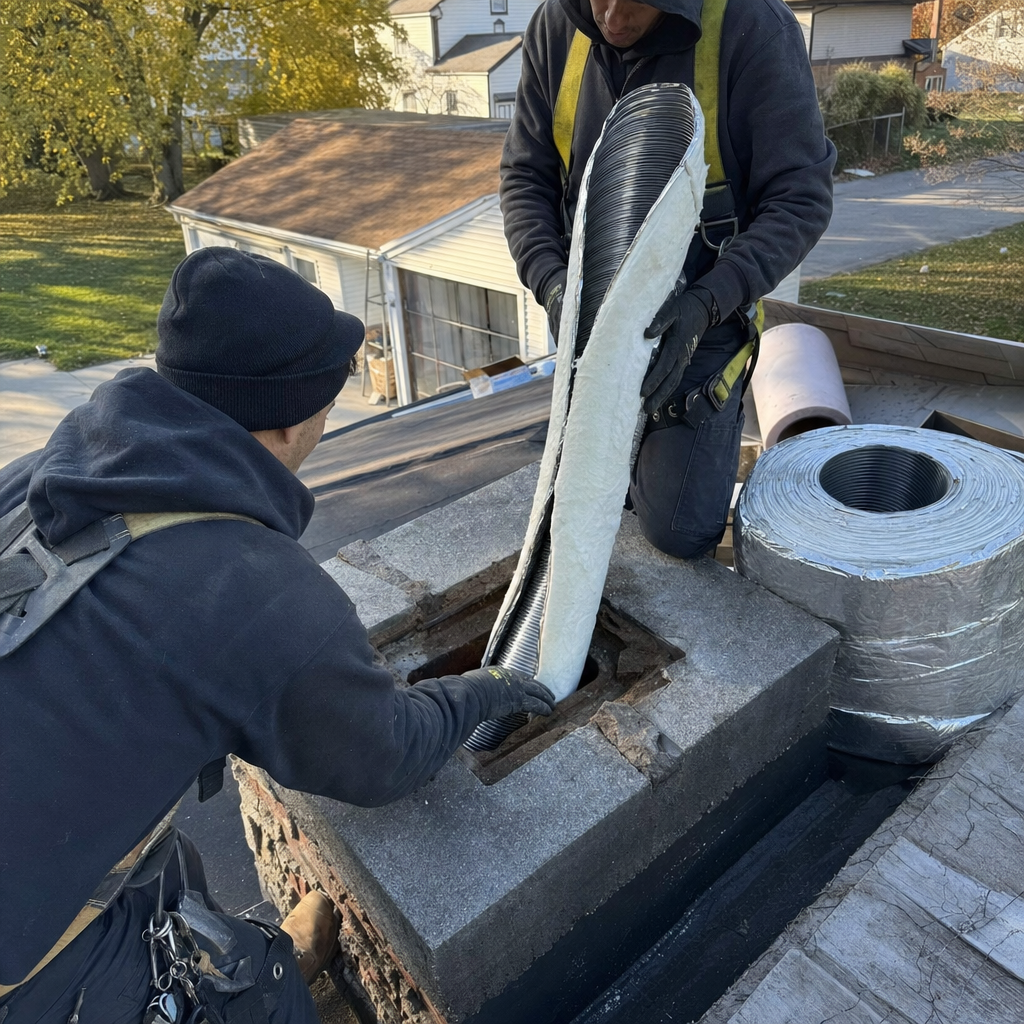
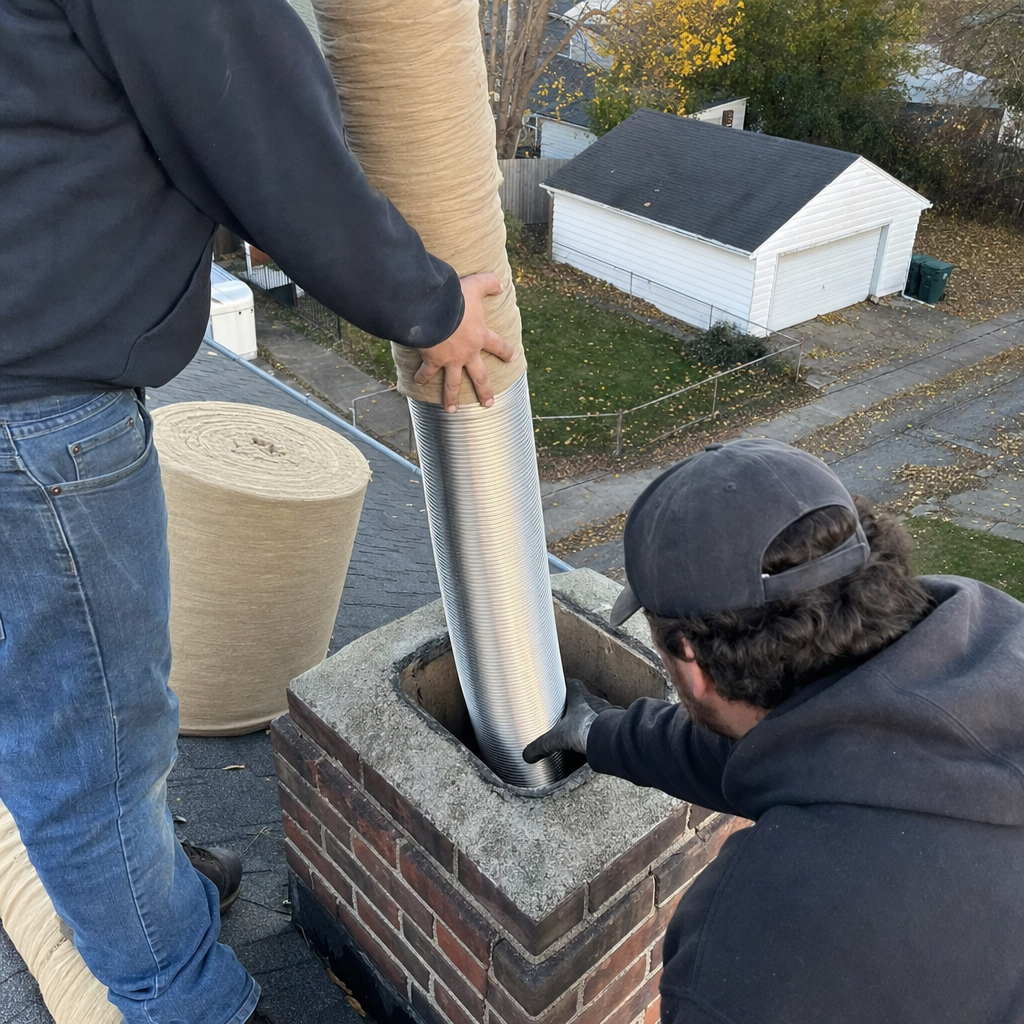
For Lancaster’s converted gas systems, a properly sized stainless steel liner is often the only correct fix. We install DuraFlex and other professional-grade stainless liners matched precisely to your appliance’s BTU output and venting requirements. On a 1963 brick ranch on Pavement Road, we found the original clay tile liner severely etched and mortar joints collapsed from years of gas furnace condensation. We installed a DuraFlex stainless steel liner, sized properly for the new gas appliance, and completed a partial crown rebuild. The homeowner now avoids the annual spalling that plagued the old oversized flue. Stainless steel handles the acidic condensate that destroyed your clay liner, and it’ll outlast the next two heating systems you install.
Flexible Liner Solutions
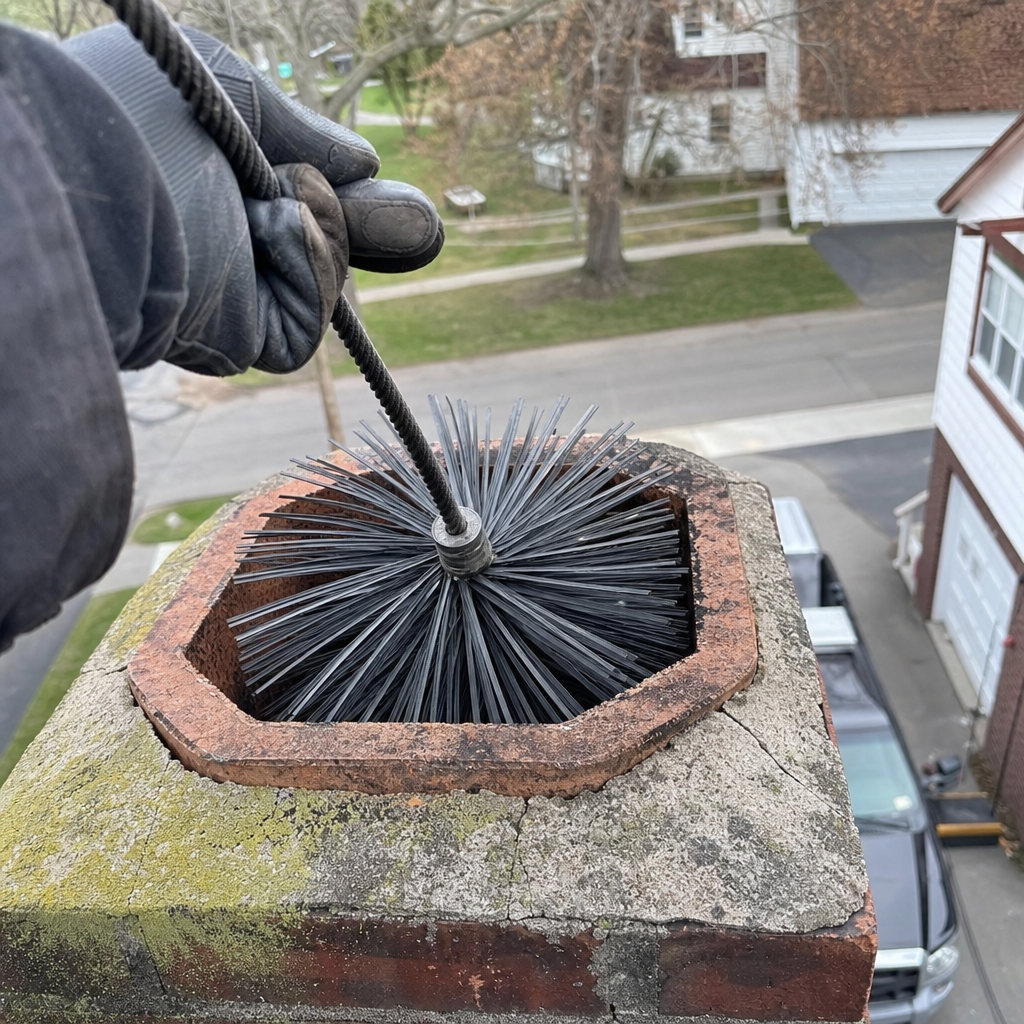
Not every Lancaster chimney has a straight shot from firebox to crown. Many of those 1950s–1970s brick ranches have offset flues or narrow smoke chambers that make rigid liner insertion impossible. Flexible liners navigate these obstructions without dismantling the chimney structure, which matters when you’re trying to preserve original masonry on a home that’s already 60-plus years old. We specify flexible stainless only when the chimney geometry demands it—never as a shortcut.
Liner Replacement for Fuel-Converted Systems
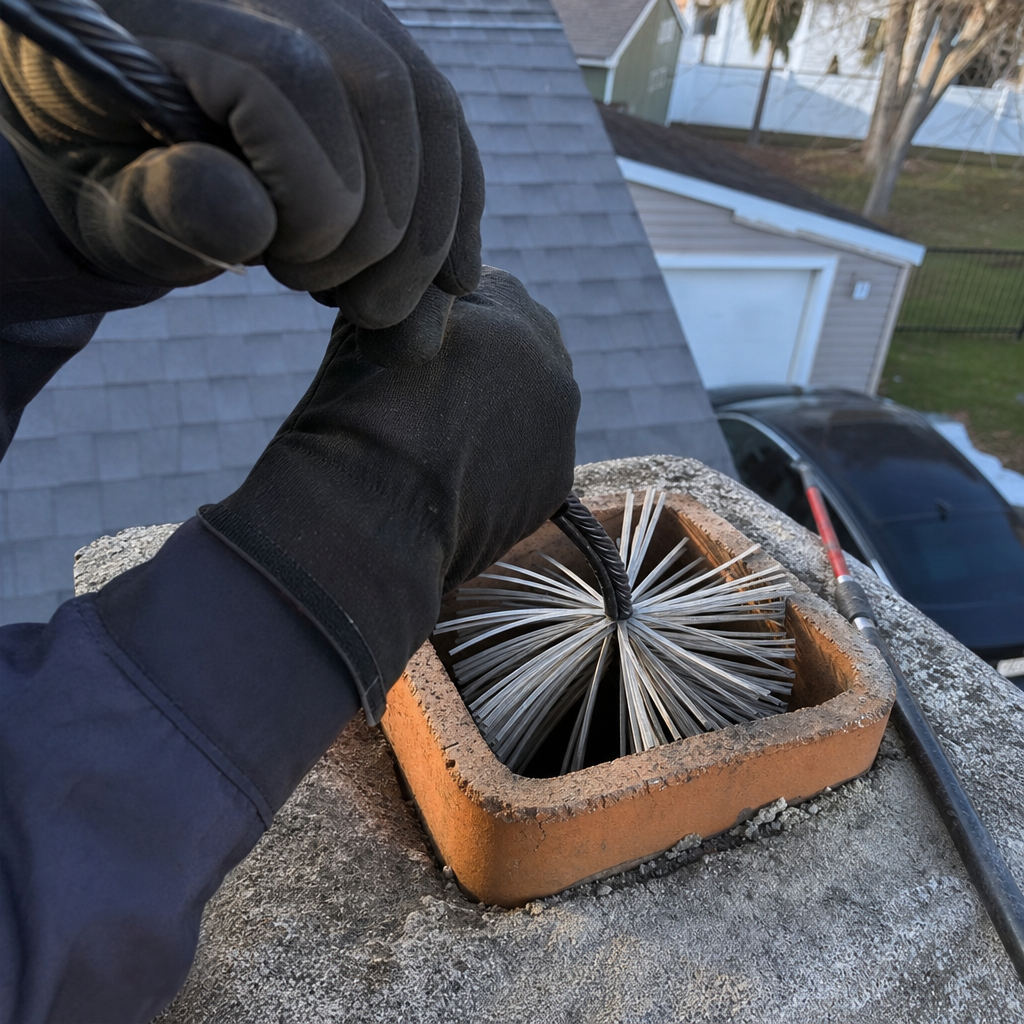
This is the work we do most often in Lancaster, and it’s the problem generic chimney guides miss entirely. Lancaster’s residential fabric is largely post-WWII brick ranches, Cape Cods, and colonials built through the 1950s–1970s, the majority with original masonry chimneys now 50–70 years old. A large share of these were engineered for oil-fired furnaces and later converted to natural gas, leaving oversized clay-tile-lined flues that are chronically undersized for modern appliance venting and prone to condensation damage and liner cracking. On the brick ranches that dominate Lancaster’s established neighborhoods, sweeps frequently find original clay tile liners fractured not from age alone but from the fuel-switch mismatch—high-efficiency gas appliances exhaust cooler, wetter flue gases that condense inside an oversized oil-era liner, etching the clay and collapsing mortar joints from the inside out, a failure mode local techs see on call after call in the 14086 zip. If your Lancaster home switched from oil to gas anytime in the last 30 years, your liner needs inspection regardless of visible exterior condition.
Partial Chimney Rebuild
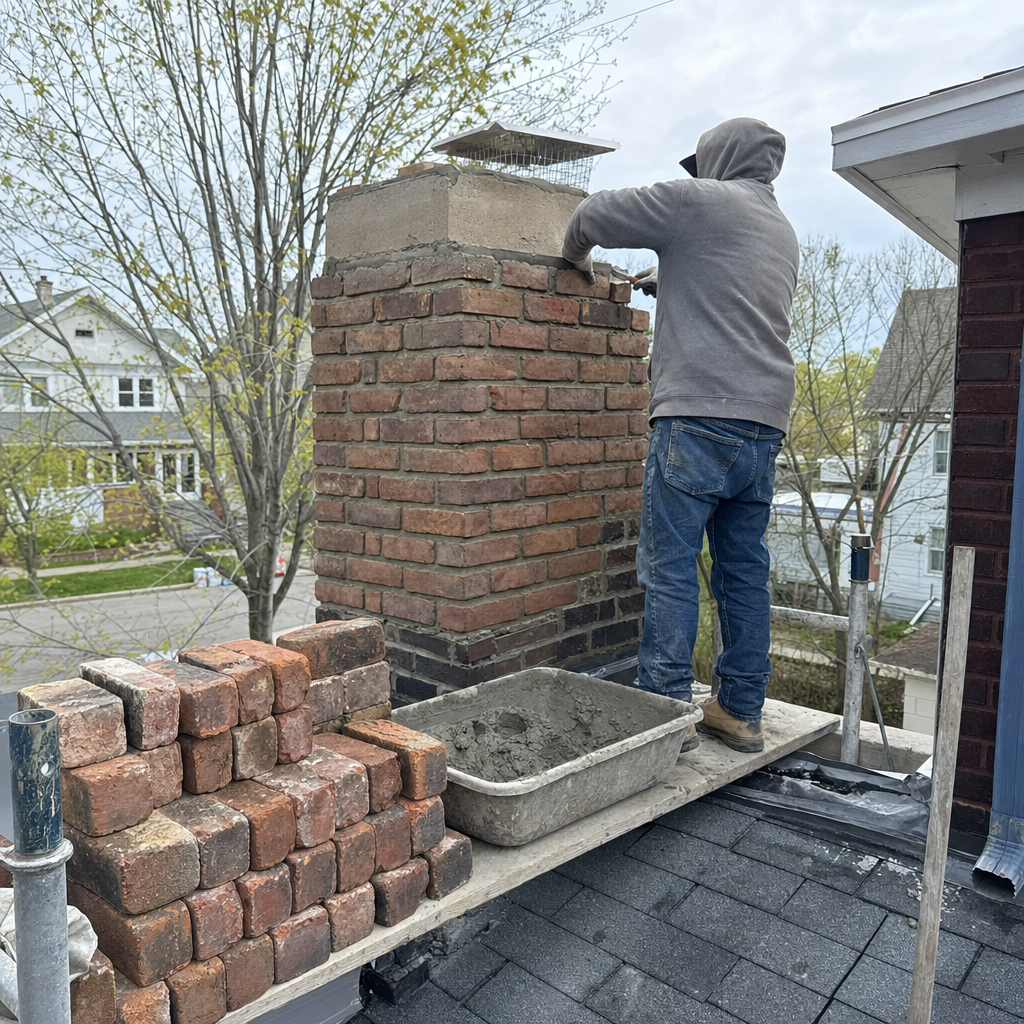
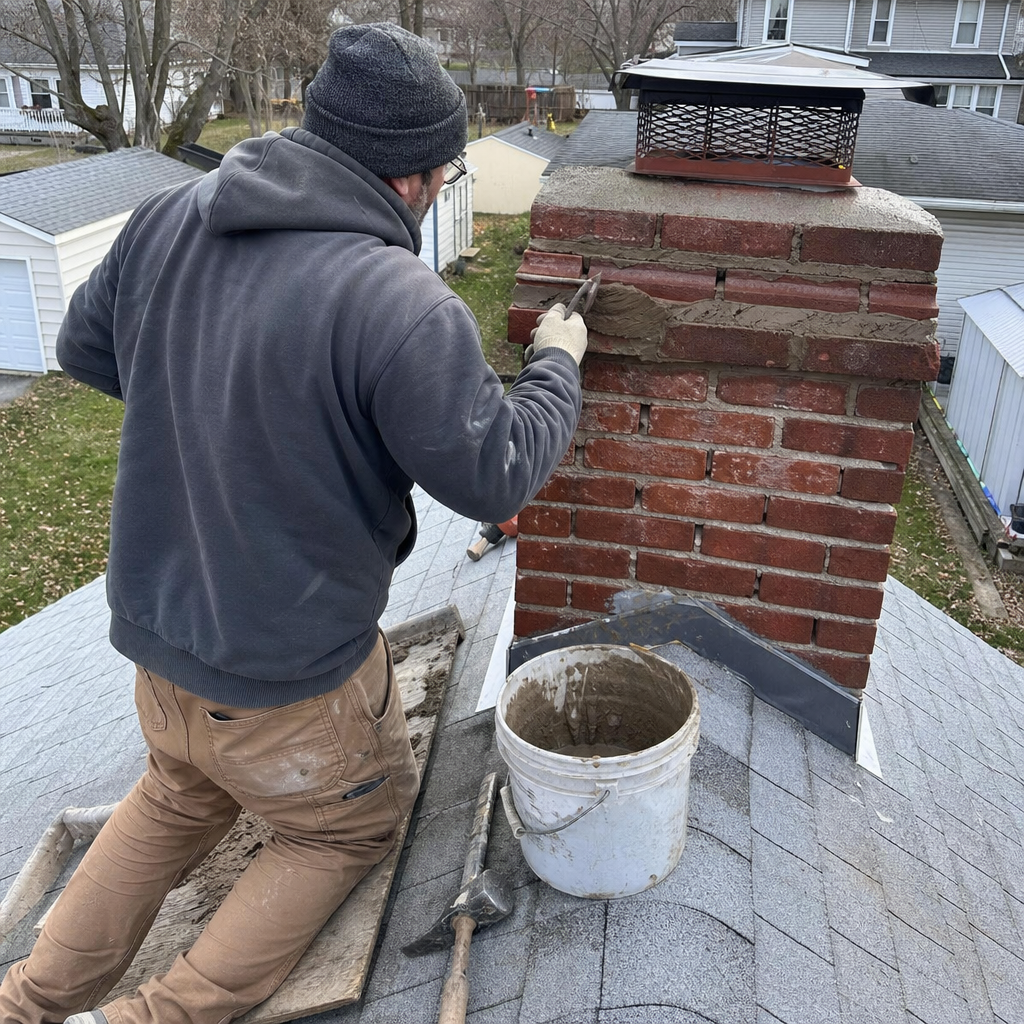
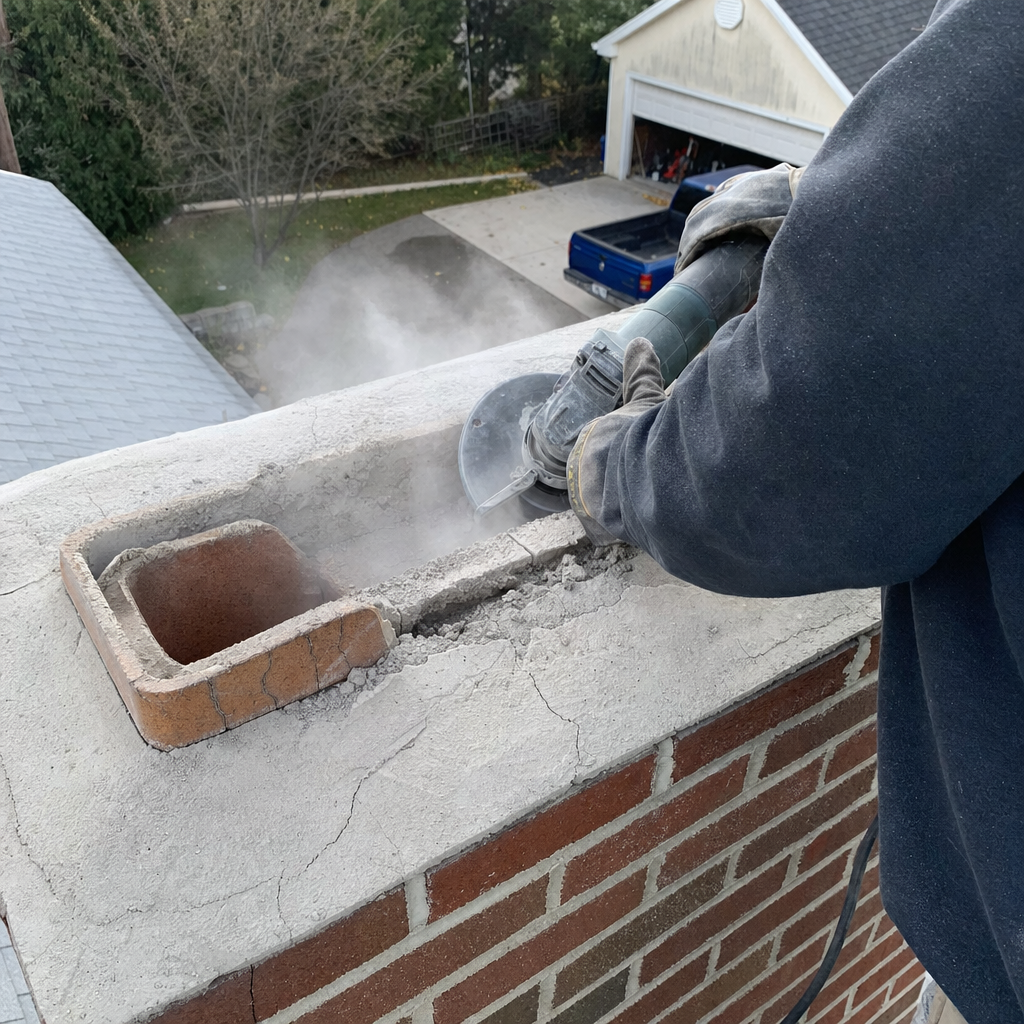
Sometimes the liner isn’t the only problem. Lancaster sits directly in the Lake Erie lake-effect snow corridor east of Buffalo, meaning chimney crowns, caps, and flashing endure months of continuous freeze-thaw cycling under heavy accumulated snow loads every winter. This specific weather pattern accelerates mortar joint spalling and flashing separation on the town’s abundant mid-century masonry chimneys at a rate that simply doesn’t apply to cities outside the lake-effect band—making annual inspection not just routine maintenance but a structural necessity. When spalling has compromised the upper courses but the lower chimney structure remains sound, we rebuild from the roofline up, integrating a new crown, proper drip edge, and compatible liner termination. This preserves what still works and fixes what doesn’t, at roughly half the cost of full reconstruction.
Full Chimney Rebuild
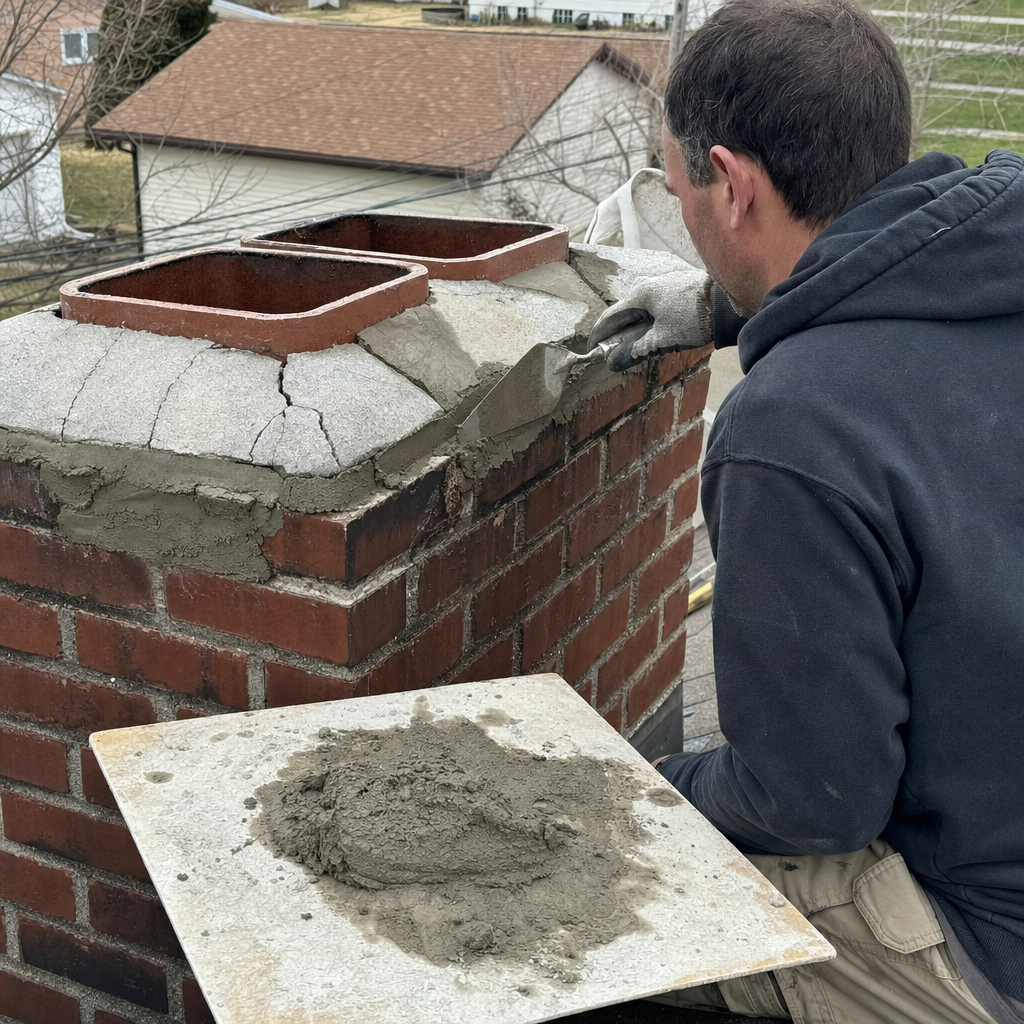
For chimneys where interior deterioration has progressed to exterior instability—bulging walls, leaning courses, or extensive mortar loss through the full height—we dismantle and rebuild using matching brick and modern mortar formulations designed for Erie County’s freeze-thaw severity. Full rebuilds in Lancaster typically involve homes where the original liner failure went unaddressed long enough that acidic condensate migrated through cracked mortar joints and compromised the structural shell. It’s avoidable with earlier intervention, but when it’s necessary, we handle the complete scope: demolition, debris removal, structural rebuild, liner installation, and final cap and crown. One company, full chimney.
What happens when you call
- 1
A real person answersNo phone trees — you reach a local pro.
- 2
You get an upfront price rangeHonest numbers before anyone is dispatched.
- 3
A background-checked tech heads outLicensed & insured, dispatched right away.
- 4
You approve before work beginsNothing starts until you say go.
Trusted Brands We Service in Lancaster
We don’t use contractor-grade substitutes. For Lancaster liner installations, we specify DuraFlex stainless steel flexible liners and HeatShield cerfractory flue sealant systems when resurfacing is appropriate for minor clay tile degradation. For crown rebuilds and component replacement, we source through Copperfield and other professional chimney supply houses—not the big-box aisle. These parts are stocked regionally, so Lancaster homeowners aren’t waiting weeks for specialty materials. Thomas Hernandez selects the specific product based on what your chimney and appliance combination actually requires, not what happens to be on the truck that day.
Common Chimney Liner & Rebuild Problems We See in Lancaster Homes
- Condensation-etched clay liners from gas conversions. Original clay tiles sized for oil furnaces collect acidic condensate when paired with high-efficiency gas appliances. The clay surface etches, mortar joints between tiles dissolve, and the liner collapses internally—often with no visible exterior warning until a camera inspection reveals the damage.
- Freeze-thaw spalling on mid-century masonry. Erie County’s lake-effect pattern delivers 80–100+ inches of snow to Lancaster most seasons, and snow sits on chimney crowns for weeks at a time rather than melting off quickly, driving repeated freeze-thaw stress into mortar joints and flashing seals. Crown cracks widen, mortar faces pop off, and water finds its way to the liner and framing.
- Fractured liners in 1950s–1970s ranches. The heating season runs roughly October through April, giving wood-burning fireplaces and furnace flues six full months to accumulate creosote and debris before most homeowners think to call. Combined with the gas-conversion mismatch, these chimneys suffer accelerated interior deterioration that standard sweeping cannot address.
- Flashing separation at roof penetrations. Lancaster’s sustained snow load and spring thaw cycles work flashing loose from the chimney shoulder, creating leaks that homeowners often mistake for roof problems. The water stains on your ceiling or attic sheathing may trace directly to compromised chimney flashing that a liner-focused contractor would miss entirely.
Pricing for Chimney Liner & Rebuild in Lancaster, NY
Here’s what Lancaster homeowners can expect for chimney liner and rebuild work in the current market:
| Service | Typical Range in Lancaster |
|---|---|
| Stainless steel liner installation (standard gas appliance) | $2,800–$4,200 |
| Flexible liner with offset navigation | $3,200–$4,800 |
| HeatShield cerfractory resurfacing (minor clay degradation only) | $1,800–$2,600 |
| Partial rebuild (crown and upper courses) | $3,500–$5,500 |
| Full chimney rebuild with new liner | $6,000–$7,500+ |
What moves you within these ranges: chimney height, number of flues, appliance type and BTU output, accessibility (steep roof pitches common on Lancaster’s Cape Cods add labor), and whether the existing liner can be extracted or must be broken out. We provide fixed, written estimates after inspection—never open-ended billing. Call (833) 632-3568 to schedule; estimates are free and include full camera documentation of what we find.
We Also Serve Cities Near Lancaster
Our Chimney Liner & Rebuild team regularly works in Depew, Harris Hill, Cheektowaga, and Williamsville—communities that share Lancaster’s lake-exposure patterns and similar post-war housing stock. If you’re in one of these neighboring areas and seeing the same liner or masonry symptoms, the same diagnostic and repair approach applies.
Serving Lancaster, NY — Our Local Coverage Area
We’re based in the Lancaster area and know this community well. Use the map below to see our service coverage — if you’re nearby, we can almost certainly help.
FAQs — Chimney Liner & Rebuild in Lancaster
Yes—almost certainly. Your 1965 chimney was built with clay tiles sized for an oil furnace’s hotter, drier exhaust. High-efficiency gas appliances produce cooler, wetter flue gases that condense inside that oversized flue, etching the clay and collapsing mortar joints from the inside. We’ve replaced dozens of these exact liners in Lancaster’s 14086 zip, and the damage is typically advanced before any symptom reaches the living space. Call (833) 632-3568 for a camera inspection and exact quote—estimates are free.
Lancaster’s position in the Lake Erie snow corridor means your crown endures months of continuous freeze-thaw cycling under heavy snow load, accelerating mortar spalling and crack propagation at roughly double the rate seen outside the lake-effect band. A sound crown with proper drip edge and sealant is structural insurance here, not cosmetic maintenance. Thomas Hernandez inspects crown condition on every Lancaster liner call, and we include crown repair in our rebuild scope when needed.
Visible signs are often absent until damage is severe—interior liner failure hides behind masonry. Indicators we look for in Lancaster homes: white efflorescence or staining on exterior brick (condensate migration), debris or tile fragments in the cleanout, rusted appliance connectors, or CO detector activation. The definitive check is a video scan of the flue interior, which we perform during every Lancaster inspection. Don’t wait for visible symptoms; by then, the liner may have compromised the chimney structure itself.
Yes, when the damage is localized to the upper courses, crown, or shoulder area. We evaluate structural integrity from the roofline down; if the lower chimney is plumb, mortar is sound, and there’s no internal deterioration spreading through the wall thickness, a partial rebuild preserves what works and fixes what doesn’t. This is common in Lancaster’s well-maintained ranches where the original liner failure was caught before condensate compromised the full height. We’ll show you exactly what the camera reveals and recommend accordingly.
We install both, and the choice depends on your chimney’s geometry, not preference. Straight flues get rigid stainless for optimal draft and durability; offset or narrow flues—common in Lancaster’s older construction—require flexible liners like DuraFlex to navigate obstructions without dismantling masonry. Thomas Hernandez determines the correct specification after measuring your flue and reviewing the appliance venting requirements. Either way, the material is professional-grade stainless, not aluminum or galvanized substitutes.
Written by Thomas Hernandez, Owner at Titan Chimney Cleaning Greater Buffalo, serving Lancaster since 2014.