
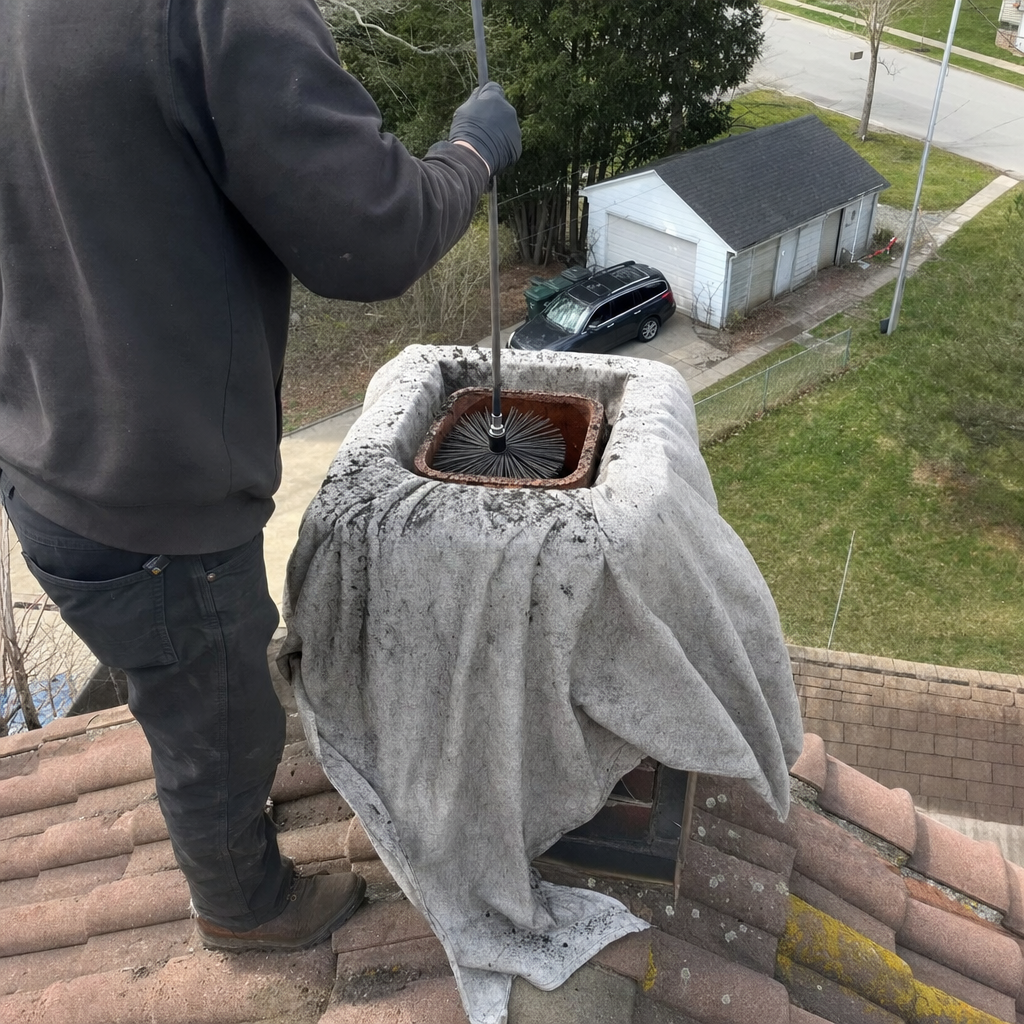
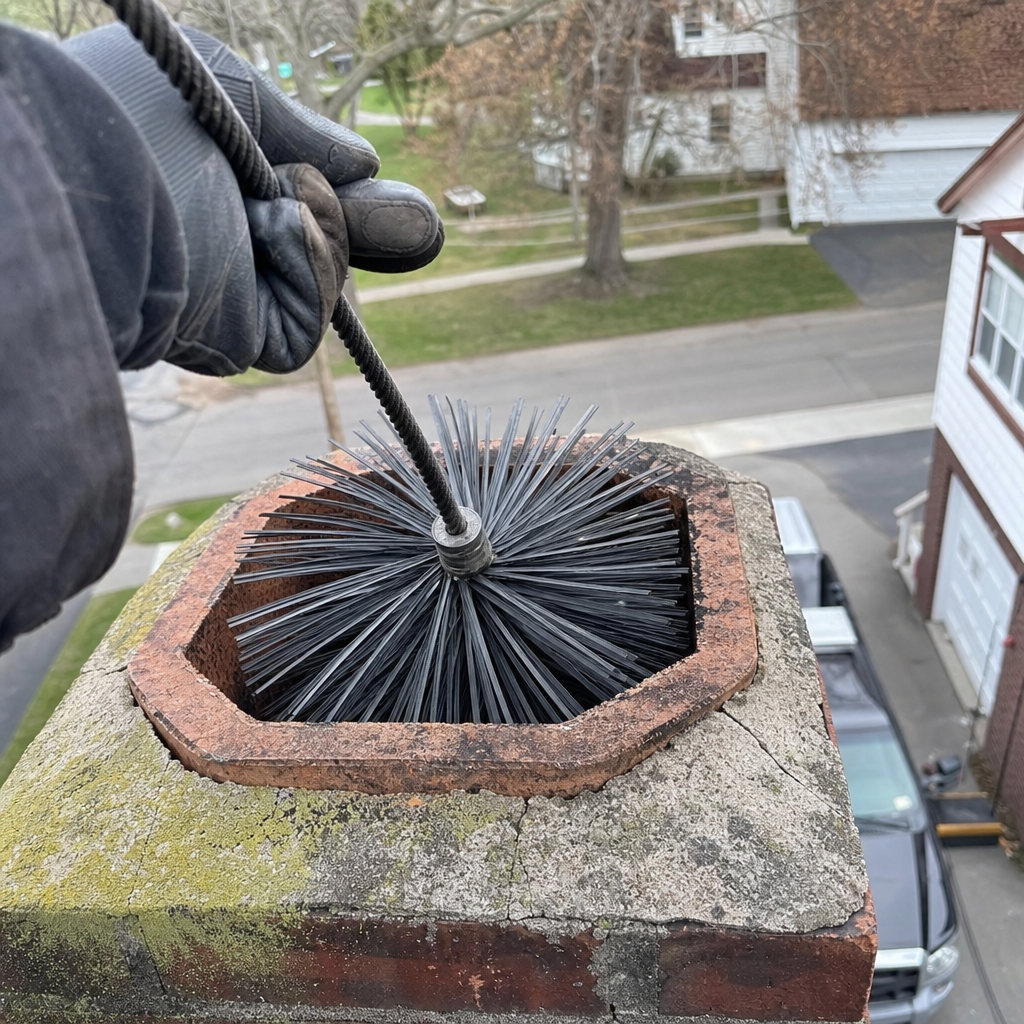
Fast, Reliable Chimney Cleaning & Sweep Across Buffalo
Chimney cleaning and sweep in Buffalo typically runs $180–$320 for a standard Level 1 inspection with sweep, and most jobs are completed same-day. Lake-effect snow, pre-WWII masonry, and coal-to-gas conversions make Buffalo chimneys a different animal than what you’ll find in most cities.
We’re Titan Chimney Cleaning Greater Buffalo, and our Chimney Cleaning & Sweep team works exclusively on chimney systems — nothing else. Thomas Hernandez, our owner and lead technician, has spent 11 years climbing roofs from the East Side to Elmwood Village to South Buffalo. We know the tight attic clearances in these old Victorians. We know which alleys you can’t get a ladder truck down. And we know that after a hard lake-effect dump, a snow-packed flue isn’t just a blockage — it’s a carbon monoxide hazard.
When you call (833) 632-3568, you’re talking to Thomas directly. He’ll give you a straight answer about what your chimney needs, when he can be there, and what it’ll cost before he ever pulls a brush.
Why Titan Chimney Cleaning Greater Buffalo Is Buffalo’s Preferred Chimney Cleaning & Sweep Company
Buffalo homeowners have left us 297 verified reviews averaging 4.7 stars. That volume matters — it means we’ve been inside enough chimneys across this city to recognize patterns that a general handyman or rotating franchise crew simply won’t catch. Thomas Hernandez shows up personally on every job. He’s the one who quotes the work, does the work, and puts his name on the result.
Our response time to Buffalo proper is typically same-day or next-day during sweep season (September through March). We don’t dispatch from some regional hub two counties away. We’re working Buffalo neighborhoods regularly — whether it’s a routine annual sweep in Kenmore or emergency creosote removal in West Seneca after a chimney fire call.
That local repetition builds expertise. We know which blocks in the Elmwood Village have the original 1890s brick that’s started spalling after decades of freeze-thaw. We know the southtowns snowbelt gets hit harder, and we know which homes on the lee side of their rooflines are most prone to wind-driven snow packing the flue solid. You don’t get that knowledge from a seasonal subcontractor with a brush and a van.
Our Chimney Cleaning & Sweep Services in Buffalo
Level 1 Inspection
A Level 1 inspection is the baseline for every Buffalo chimney we touch — and in this city, it needs to be more thorough than the NFPA 211 minimum. We inspect the readily accessible portions of the chimney exterior, interior, and connecting appliance. But we also look for the Buffalo-specific failure modes: frost-heaved crown cracks that opened over winter, mortar joints that were tight in October but have started spalling by April, and signs that last spring’s lake-effect snow packed the flue hard enough to damage the liner.
For homes in Buffalo’s dense pre-WWII core — the East Side, Elmwood Village, Black Rock — we’re often working in tight attic crawlspaces with original multi-flue masonry. The inspection takes longer. The access is harder. We don’t rush it.
Level 2 Inspection
Level 2 is required when you’re buying or selling a home, after a chimney fire, or when you’ve changed your heating appliance. In Buffalo, we strongly recommend Level 2 for any home built before 1940 with a converted coal furnace. Those oversized flue liners are invisible from the firebox. A camera inspection lets us document the actual flue condition, measure liner dimensions against current appliance output, and spot the glazed creosote buildup that oversized liners collect.
We’ve done Level 2 inspections in South Buffalo rowhouses where the chimney runs through three neighboring units. Access is creative. We figure it out.
Creosote Removal
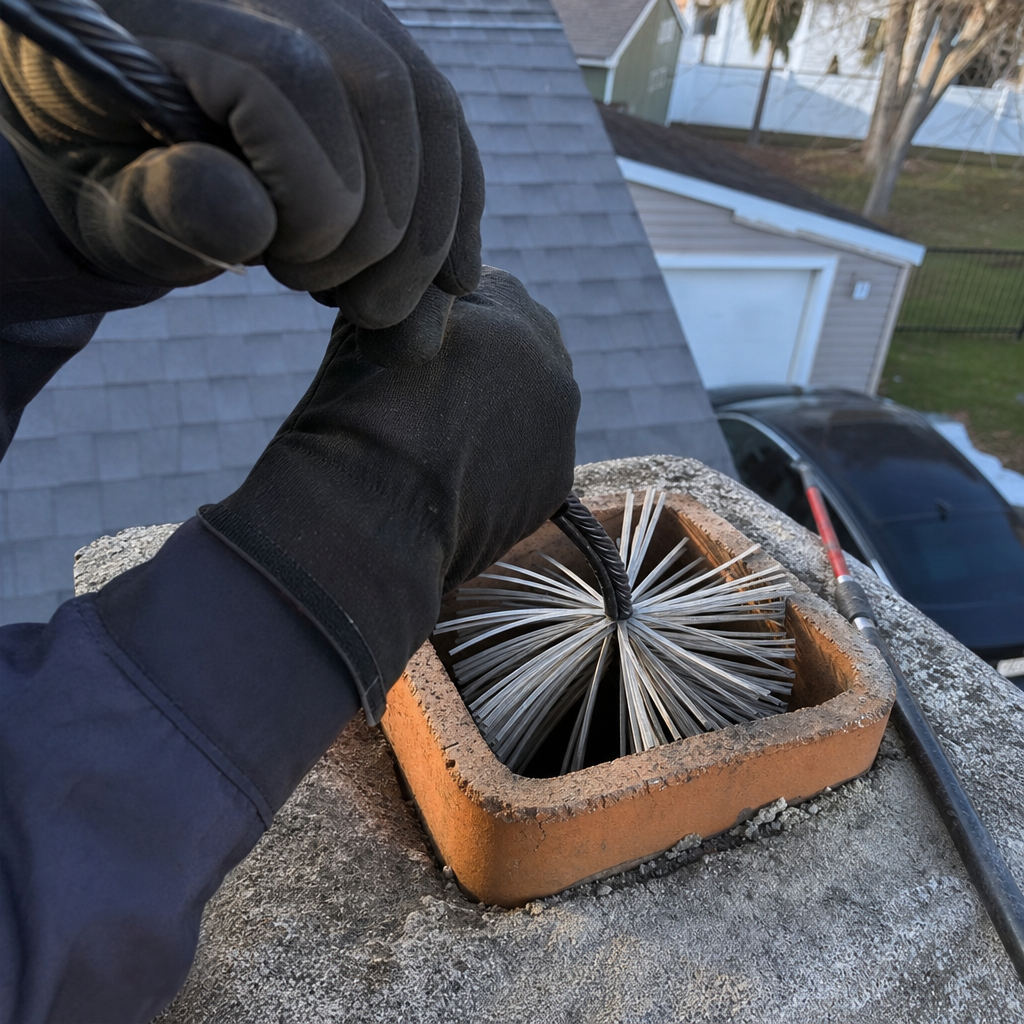
Creosote buildup is accelerated in Buffalo by two local factors: oversized flue liners from coal conversions (slow, cool flue gases condense more creosote), and homeowners burning improperly seasoned wood through long heating seasons. Stage 1 creosote brushes off. Stage 2 requires rotary chains. Stage 3 — glazed, tar-like, and highly combustible — needs chemical treatment and mechanical removal.
We remove creosote from Buffalo chimneys year-round, but the heaviest buildup we see is always in late winter, after four months of daily firing. Don’t let it reach Stage 3. A standard sweep catches it early.
Soot Removal & Annual Sweep
Annual sweeping isn’t a calendar luxury in Buffalo — it’s maintenance driven by use volume and heating season length. Most Buffalo homeowners with active wood-burning fireplaces or older gas inserts need a sweep every year, sometimes twice if the appliance is a primary heat source. Our annual sweep includes full debris removal, firebox cleaning, smoke chamber and damper inspection, and a written condition report.
For gas appliances, soot removal addresses the fine particulate that collects in oversized flues where draft is marginal. It’s less dramatic than creosote, but it restricts flow and creates corrosion over time.
What happens when you call
- 1
A real person answersNo phone trees — you reach a local pro.
- 2
You get an upfront price rangeHonest numbers before anyone is dispatched.
- 3
A background-checked tech heads outLicensed & insured, dispatched right away.
- 4
You approve before work beginsNothing starts until you say go.
Trusted Brands We Service in Buffalo
We install and repair with professional-grade materials — not the contractor-grade substitutes you’ll find at big-box stores. For liner replacements and resurfacing in Buffalo’s tight-clearance chimneys, we spec DuraFlex stainless liners and HeatShield cerfractory flue sealant. HeatShield in particular lets us resurface deteriorating clay liners without a full tear-out, which matters enormously in Buffalo’s older homes where the flue is often boxed into structural masonry with no room to expand. For caps, crowns, and exterior repairs, we source through Gelco and Copperfield. These are brands built for chimney professionals, not weekend DIYers. We keep common sizes in stock so Buffalo customers aren’t waiting two weeks for a cap that fits.
Common Chimney Cleaning & Sweep Problems We See in Buffalo Homes
- Freeze-thaw spalling on south-facing mortar joints. Buffalo’s 80–100 annual freeze-thaw cycles, driven by lake-effect moisture, attack mortar aggressively. Joints that looked sound in fall inspection often show open gaps by spring, especially on chimneys with sun exposure that drives daily thaw-refreeze.
- Snow-packed flue openings after lake-effect dumps. Wind-driven snow packs chimney caps and flue openings solid, blocking exhaust flow and creating carbon monoxide backdraft conditions. It’s a seasonal pattern we recognize immediately, particularly on lee-facing chimneys in the southtowns snowbelt.
- Oversized liners from coal-to-gas conversions causing condensation and creosote buildup. Buffalo’s 1880–1930 housing stock is full of these. The original coal flue is too large for modern gas or oil appliances, so flue gases move slowly, cool prematurely, and deposit creosote and condensate that a properly sized liner would carry out.
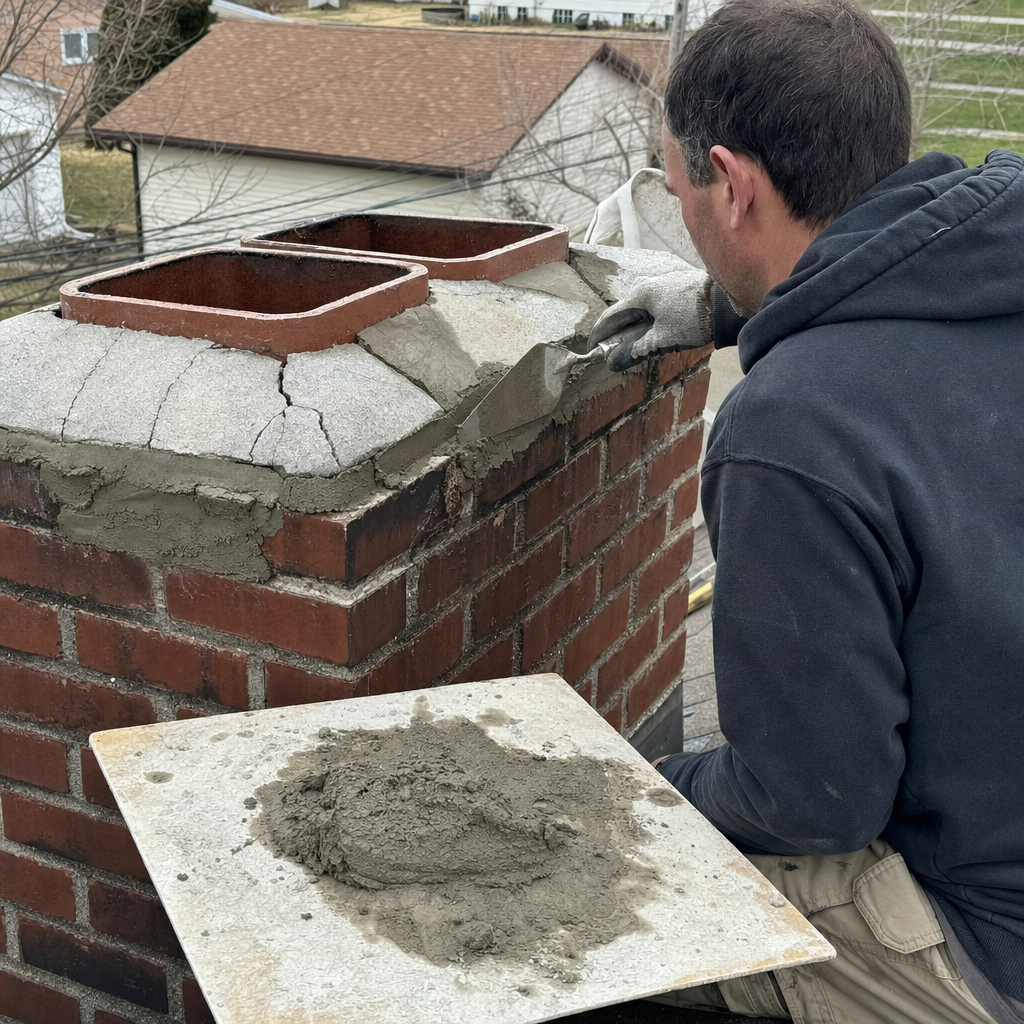
- Crown deterioration accelerated by saturated freeze-thaw. Lake-effect snow is wet snow. It soaks concrete crowns, refreezes overnight, and opens hairline cracks into water pathways. By spring, we’ve seen crowns that shed water properly in October completely compromised.
Pricing for Chimney Cleaning & Sweep in Buffalo, NY
Here’s what chimney cleaning and sweep services cost in the Buffalo market:
| Service | Typical Range in Buffalo |
|---|---|
| Level 1 Inspection with Standard Sweep | $180 – $260 |
| Level 2 Inspection (includes video scan) | $280 – $420 |
| Creosote Removal (Stage 2–3, per flue) | $320 – $580 |
| Annual Sweep (gas appliance, no inspection) | $140 – $200 |
| Fireplace Cleaning & Soot Removal | $160 – $240 |
What moves you within these ranges? Access difficulty — a third-floor flue in a tight Elmwood Village attic costs more than a straight run in a ranch. Creosote stage — Stage 3 glazed buildup takes hours, not minutes. Liner condition — if we find a failed liner during sweep, we’ll document it and quote repair separately, never as a surprise upsell. Call (833) 632-3568 for an exact quote on your chimney. Estimates are free, and Thomas Hernandez will give you the number himself.
We Also Serve Cities Near Buffalo
Our service radius covers the full Greater Buffalo area, including West Seneca, Lackawanna, Cheektowaga, and Kenmore. Whether you’re dealing with southtowns snowbelt exposure in West Seneca or the tight pre-war housing stock in Lackawanna, we bring the same owner-operated approach — Thomas Hernandez on every job, no subcontracted crews.
Serving Buffalo, NY — Our Local Coverage Area
We’re based in the Buffalo area and know this community well. Use the map below to see our service coverage — if you’re nearby, we can almost certainly help.
FAQs — Chimney Cleaning & Sweep in Buffalo
Yes — after major lake-effect events, we regularly find flue openings and chimney caps packed solid with wind-driven snow and ice. This blocks combustion gases and creates carbon monoxide backdraft conditions inside the home. If you’ve had a heavy dump and your fireplace or appliance is drafting poorly or triggering CO detectors, stop using it and call (833) 632-3568 immediately.
Because the original masonry flue was built for coal combustion, which requires much more airflow than modern gas or oil appliances. When heating systems were converted — typically mid-20th century — the flue was rarely resized. Those oversized liners slow flue gases, causing condensation, poor draft, and accelerated creosote buildup. We encounter this constantly across Buffalo’s East Side, Elmwood Village, and South Buffalo.
Annually, minimum — and we recommend inspection in early fall before heating season, with a follow-up look in spring after freeze-thaw stress. East Side Victorians with original multi-flue masonry face compounded risks: aging mortar, coal-conversion liner issues, and tight working clearances that make small problems harder to spot. Call (833) 632-3568 to schedule; we’ll work around your access constraints.
Crown cracking and mortar joint spalling from freeze-thaw cycling. Buffalo’s position downwind of Lake Erie creates among the most punishing freeze-thaw environments of any major U.S. city. Wet lake-effect snow saturates mortar and crown concrete, then overnight temperature drops refreeze the moisture — expanding, cracking, and flaking the masonry. A chimney that passed visual inspection in October can have open joints and compromised crowns by April.
Yes — we install DuraFlex stainless steel liners and apply HeatShield cerfractory resurfacing to properly size the flue for your current appliance, even in constrained spaces. In the Elmwood Village, we recently resized a liner in a Victorian’s original coal-converted flue using HeatShield, eliminating chronic downdrafts and condensation. Tight access is harder work, but it’s standard for Buffalo’s housing stock. Call (833) 632-3568 to discuss your specific flue dimensions and space constraints.
Written by Thomas Hernandez, Owner at Titan Chimney Cleaning Greater Buffalo, serving Buffalo since 2014.