
Fast, Reliable Chimney Repair Across Lancaster
Chimney repair in Lancaster typically costs $350–$2,800 depending on scope, and most standard repairs are completed in a single visit. For Lancaster homeowners with mid-century masonry chimneys, addressing crown spalling and flashing separation early prevents the $8,000–$15,000 rebuild that deferred maintenance often demands.
We’re Titan Chimney Cleaning Greater Buffalo, and we’ve spent 11 years working on chimneys in Erie County’s lake-effect corridor. Lancaster sits 20 minutes east of our Buffalo base, and we make the trip regularly — from the brick ranches along Aurora Street to the Cape Cods near Como Park Boulevard and the colonials off Transit Road. Thomas Hernandez, our owner and lead technician, handles every job personally. If you’re seeing crumbling mortar, water stains on your ceiling near the chimney, or bricks flaking off after another hard winter, call us at (833) 632-3568 for a free inspection and honest estimate.
Why Titan Chimney Cleaning Greater Buffalo Is Lancaster’s Preferred Chimney Repair Company
Our Chimney Repair team has built a reputation in Lancaster by showing up when we say we will and telling homeowners the truth about what their chimney actually needs. Nearly 300 homeowners across Greater Buffalo have left us verified reviews averaging 4.7 stars — and Lancaster customers specifically mention Thomas’s willingness to explain the “why” behind every repair, not just hand over a bill.
Response time to Lancaster is typically same-day or next-day during the fall rush, and we don’t subcontract to rotating crews. Thomas is the person who climbs your ladder, diagnoses the problem, and does the work. That matters on Lancaster’s older homes, where a technician who doesn’t understand oil-to-gas conversion history can miss the real problem entirely.
We know Lancaster’s housing stock intimately — the 1950s brick ranches with their original clay-tile liners, the Cape Cods on Harris Hill with deteriorated flashing, the colonials near Walden Avenue dealing with crown spalling after decades of lake-effect snow. This isn’t generic chimney knowledge. It’s 11 years of seeing the same failure patterns on the same house types, season after season.
Our Chimney Repair Services in Lancaster
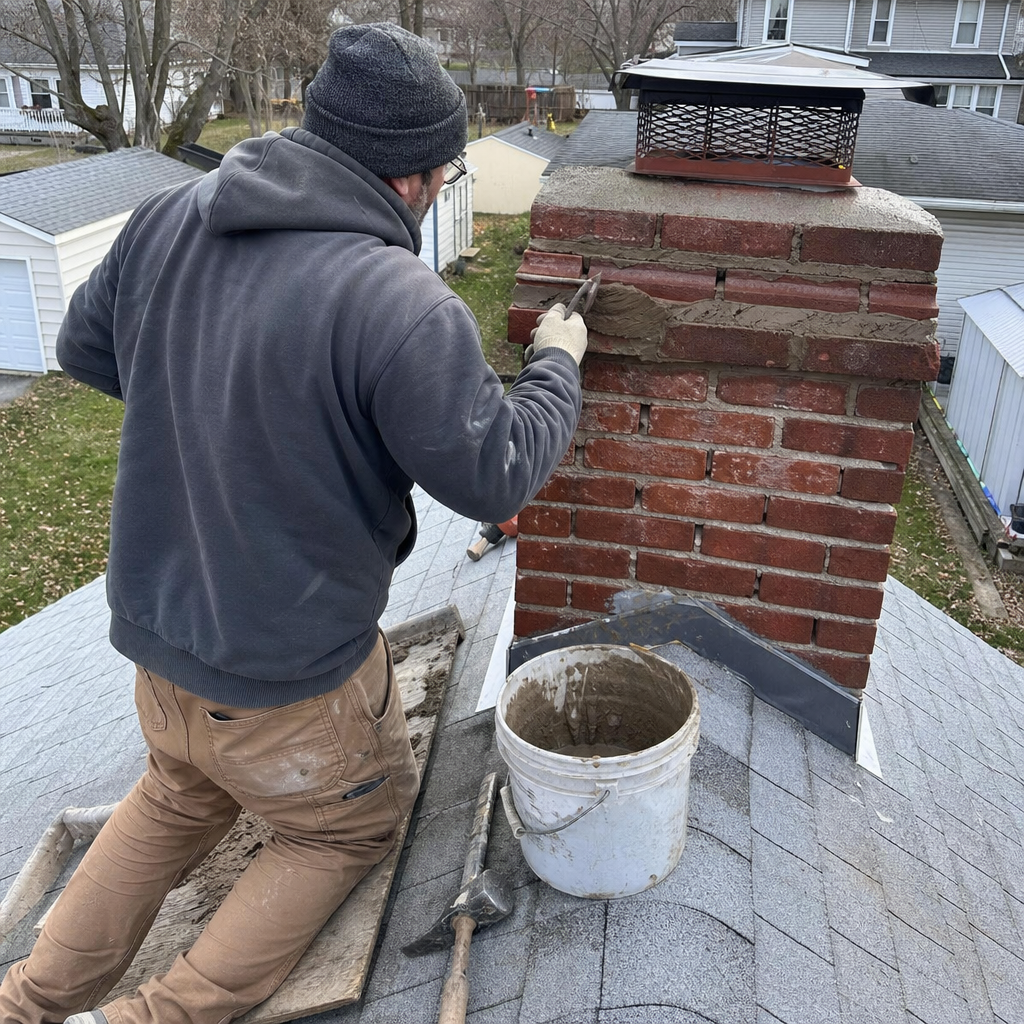
Spalling Brick Repair
Spalling — when bricks flake, crumble, or pop their faces off — is epidemic on Lancaster chimneys, and it’s not normal aging. In Lancaster’s lake-effect snow corridor, snow sits on chimney crowns for weeks rather than melting off, accelerating freeze-thaw spalling and flashing failure at a rate unseen in cities just 20 miles south of the lake-effect band. Water penetrates the brick, freezes, expands, and blows the face off. We cut out spalled bricks in matching profiles, reset with type-N or type-S mortar appropriate to Lancaster’s freeze-thaw exposure, and seal with breathable water repellent. On a 1956 brick ranch on Aurora Street, we found an original clay-tile flue liner fractured from condensation damage after the homeowner converted from oil to a high-efficiency gas furnace without resizing the flue. We installed a DuraFlex stainless-steel liner and rebuilt the crown to stop the winter moisture intrusion that was spalling the crown bricks.
Chimney Rebuilding
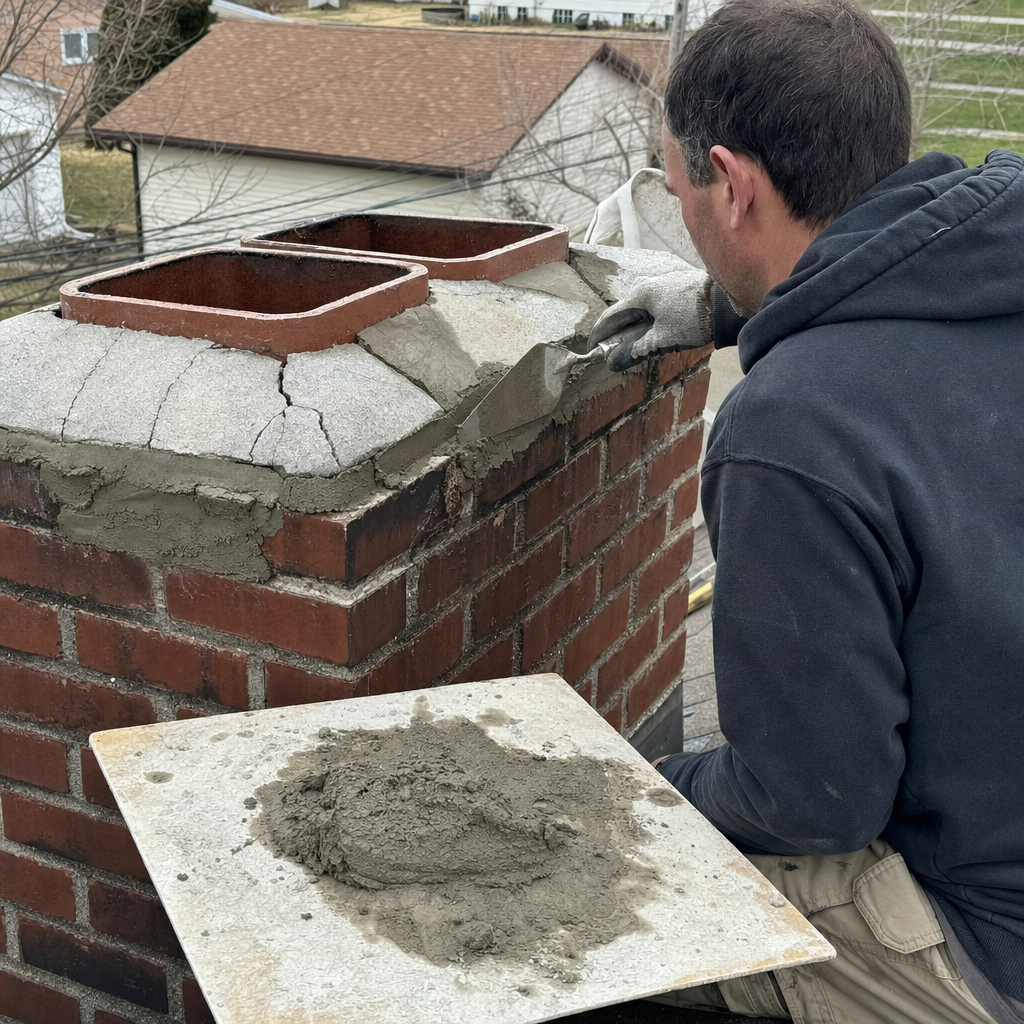
When spalling, mortar loss, or structural settling has compromised more than 30% of the chimney mass, partial or full rebuilding becomes the only safe option. Lancaster’s 50–70 year old masonry chimneys hit this threshold regularly, especially where original crowns have failed and water has saturated the stack for multiple seasons. We dismantle to sound masonry, rebuild with matching brick and proper bond patterns, and install a poured concrete crown with proper overhang and drip edge — engineered specifically for Lancaster’s snow-load and freeze-thaw cycle. A rebuilt chimney with correct crown geometry sheds lake-effect snow instead of absorbing it.
Flashing Repair
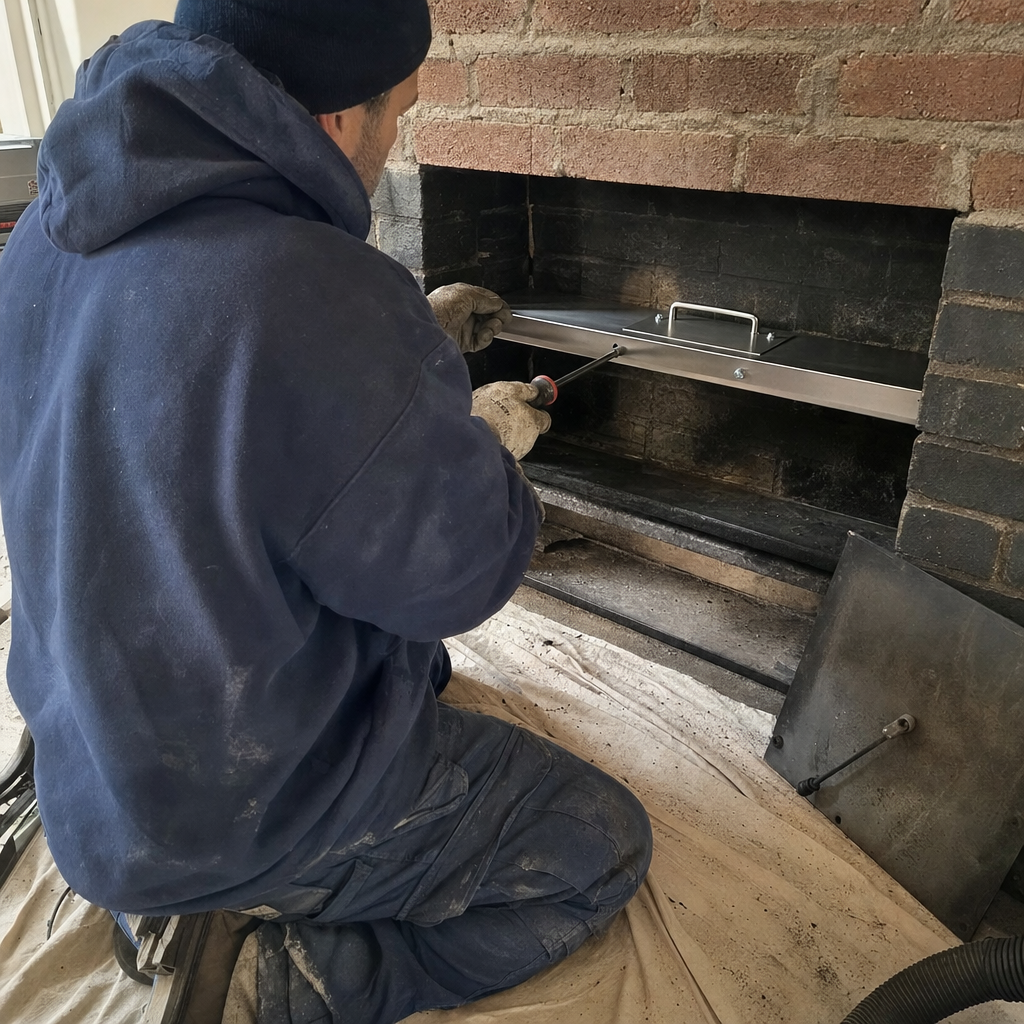
Flashing separation at the chimney-roof junction is one of the most common calls we get from Lancaster homeowners after heavy snow. Flashings separate from the roof at the chimney base under heavy snow packs, causing hidden water damage inside the chase. The step flashing and counterflashing assembly takes a beating when snow sits against it for weeks, then melts in sudden thaws. We remove compromised flashing, inspect the deck and framing for rot (common in 1960s-era construction with minimal ice barrier), and install new copper or galvanized step flashing integrated with the roofing system. For Lancaster’s older homes, we often find the original flashing was never properly integrated with the shingles — a quick caulk job that failed decades ago.
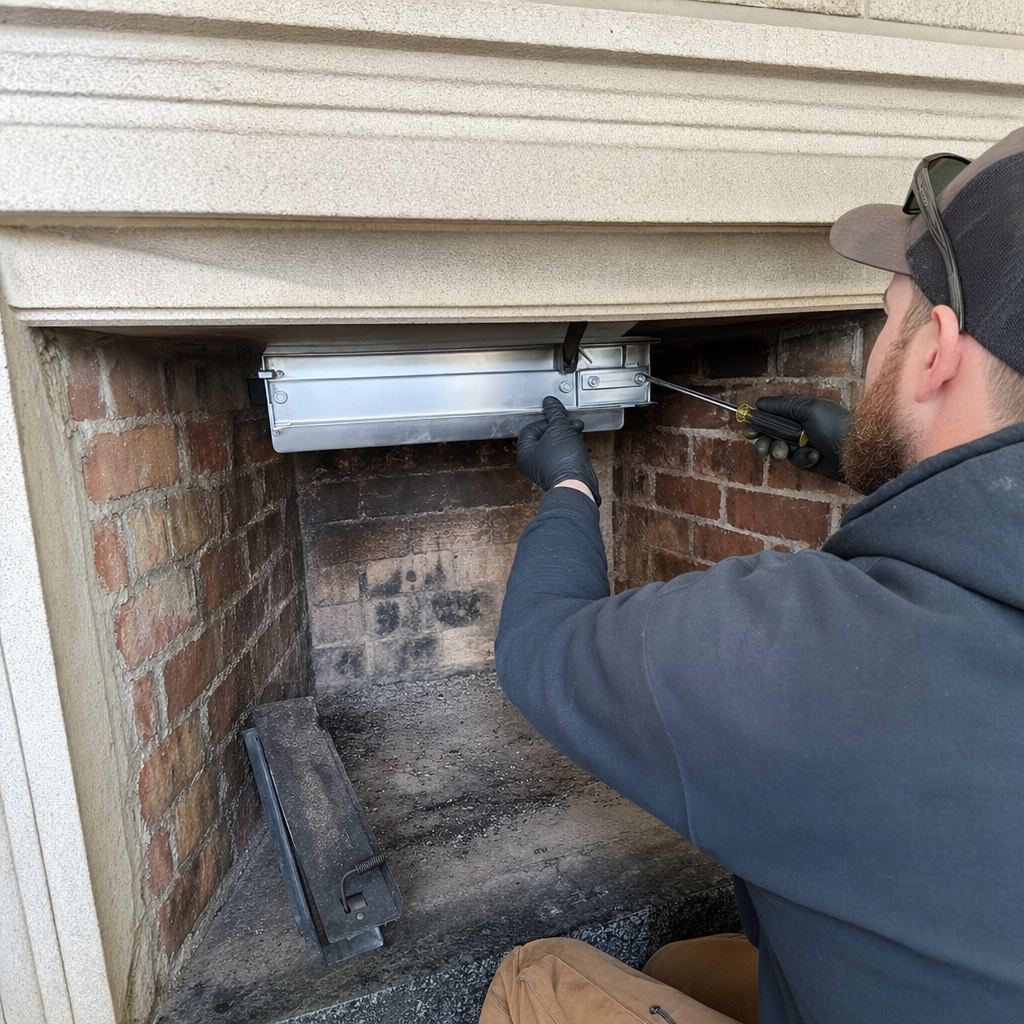
Mortar Repointing & Tuckpointing
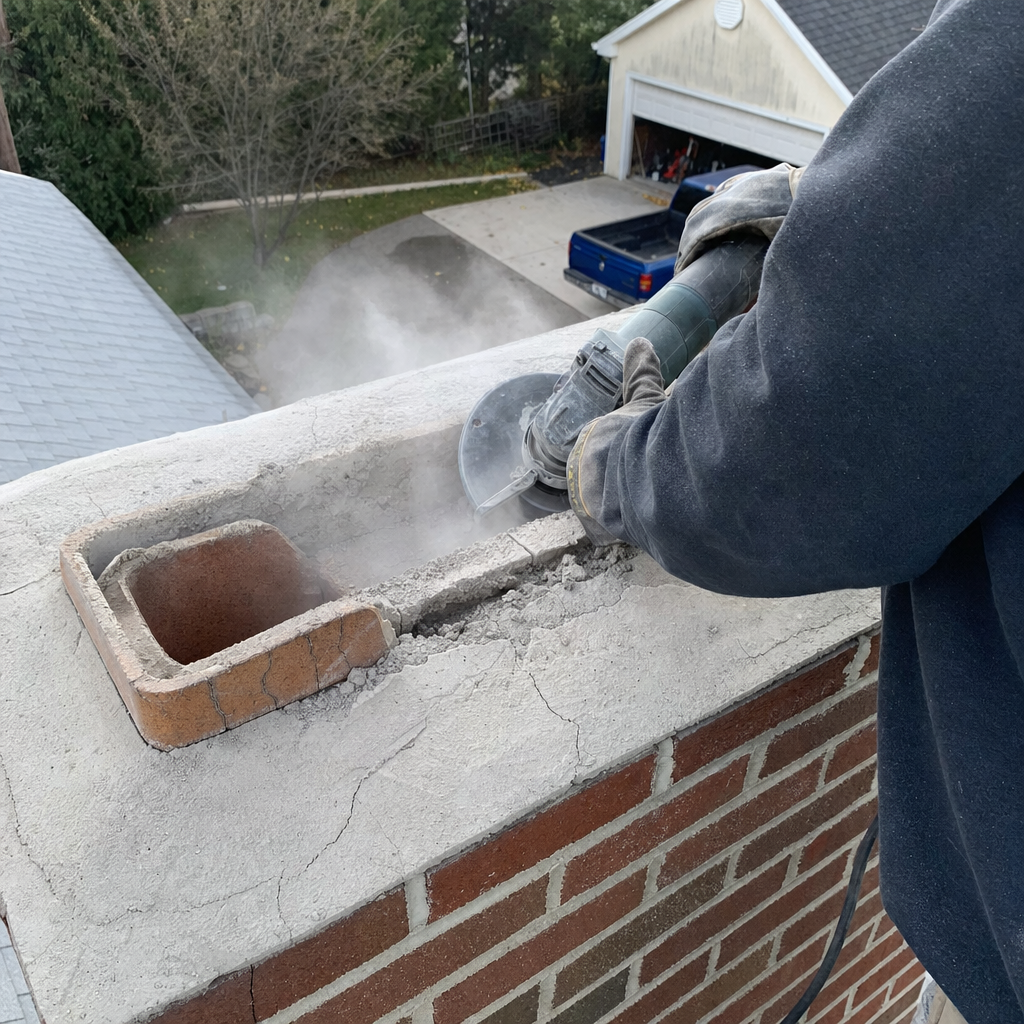
Before spalling bricks require replacement, deteriorated mortar joints can be addressed with repointing — grinding out failed mortar to proper depth and packing new mortar in matching color and compressive strength. Lancaster’s chimneys need this more frequently than chimneys outside the snow belt because of the extended freeze-thaw exposure. Tuckpointing, a more specialized technique, involves cutting narrow grooves in the new mortar and infilling with a contrasting color to replicate the fine-line appearance of historic brickwork. Most Lancaster homes don’t need the decorative tuckpointing approach, but for homeowners in established neighborhoods who want to maintain period aesthetics, we offer it.
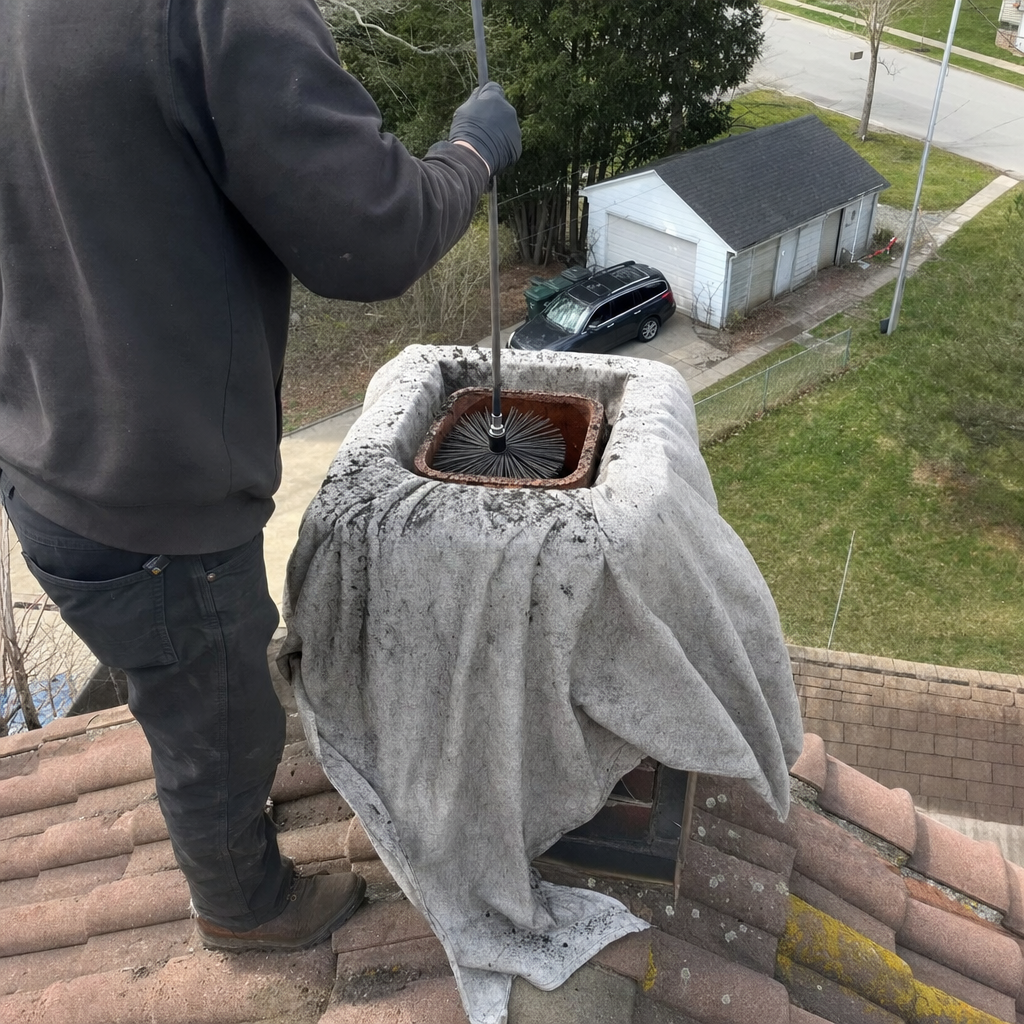
Chimney Waterproofing
After repair work is complete, we apply professional-grade breathable water repellent — never a film-forming sealer that traps moisture inside. Lancaster’s chimneys need to exhale the vapor that inevitably penetrates brick during thaws; a non-breathable coating turns the wall into a water balloon. We use products formulated for freeze-thaw climates, applied after repairs are fully cured.
What happens when you call
- 1
A real person answersNo phone trees — you reach a local pro.
- 2
You get an upfront price rangeHonest numbers before anyone is dispatched.
- 3
A background-checked tech heads outLicensed & insured, dispatched right away.
- 4
You approve before work beginsNothing starts until you say go.
Trusted Brands We Service in Lancaster
We don’t use contractor-grade substitutes from the big-box stores. For liner installations on Lancaster’s converted gas systems, we stock and install DuraFlex stainless-steel liners — the standard for oil-to-gas conversions because they properly size the flue for modern appliance output. For crown rebuilds and spalling repair, we source professional-grade materials through Copperfield and HeatShield. These aren’t brands you pick up at the local hardware store, and that’s intentional. Lancaster homeowners who’ve already dealt with one failed repair deserve materials that match the severity of their climate. We keep common liner diameters and flashing configurations on hand to minimize wait times for Lancaster customers during the October-through-April heating season.
Common Chimney Repair Problems We See in Lancaster Homes
- Crown spalling under sustained snow load. Lancaster’s position in the lake-effect corridor means chimney crowns endure months of continuous freeze-thaw cycling under heavy accumulated snow loads every winter. We see concrete crowns cracked and disintegrating after just 15–20 years — half their expected life in a milder climate.
- Condensation-damaged clay liners from oil-to-gas conversions. On the brick ranches that dominate Lancaster’s established neighborhoods, sweeps frequently find original clay tile liners fractured not from age alone but from the fuel-switch mismatch — high-efficiency gas appliances exhaust cooler, wetter flue gases that condense inside an oversized oil-era liner, etching the clay and collapsing mortar joints from the inside out, a failure mode local techs see on call after call in the 14086 zip.
- Flashing separation after heavy snow pack. The weight and duration of snow against the chimney-roof junction breaks the seal on aging flashing, especially on homes where the original installation relied on caulk rather than proper step-flashing integration.
- Efflorescence and interior moisture damage. White powdery deposits on interior chimney faces signal water migration through saturated masonry — common in Lancaster’s older homes where the heating season runs six months and chimneys never fully dry out between cycles.
Pricing for Chimney Repair in Lancaster, NY
Here’s what Lancaster homeowners can expect for typical repairs in the 14086 market:
- Mortar repointing (tuckpointing): $450–$950 for a standard single-flue chimney
- Spalling brick repair (partial, up to 10 bricks): $350–$650
- Chimney waterproofing: $300–$550
- Flashing repair/replacement: $400–$850
- Crown rebuild or pour: $800–$1,400
- Stainless steel liner installation (DuraFlex): $1,800–$2,800
- Partial chimney rebuild: $2,500–$5,500
- Full chimney rebuild: $8,000–$15,000
These ranges reflect Lancaster’s specific conditions — older masonry requiring more extensive prep, lake-effect moisture exposure demanding higher-grade materials, and the fuel-conversion history that often reveals hidden liner damage once work begins. We provide exact written estimates before starting any job, and inspections are free. Call (833) 632-3568 to schedule.
We Also Serve Cities Near Lancaster
We regularly repair chimneys in Depew (where many of the same post-war ranches share Lancaster’s liner issues), Harris Hill, Cheektowaga, and Williamsville. If you’re in a neighboring community and seeing the same spalling, leaking, or draft problems, we cover your area too.
Serving Lancaster, NY — Our Local Coverage Area
We’re based in the Lancaster area and know this community well. Use the map below to see our service coverage — if you’re nearby, we can almost certainly help.
FAQs — Chimney Repair in Lancaster
Lancaster sits directly in the Lake Erie lake-effect snow corridor, meaning chimney crowns endure months of continuous freeze-thaw cycling under heavy accumulated snow loads every winter. Snow sits on crowns for weeks rather than melting off, driving repeated freeze-thaw stress into mortar joints and brick faces. Cities just 20 miles south of the snow band don’t see this accelerated deterioration. If your Lancaster brick ranch is showing flaking or crumbling bricks, call (833) 632-3568 for a free inspection — waiting typically turns a $400 repair into a $3,000 rebuild.
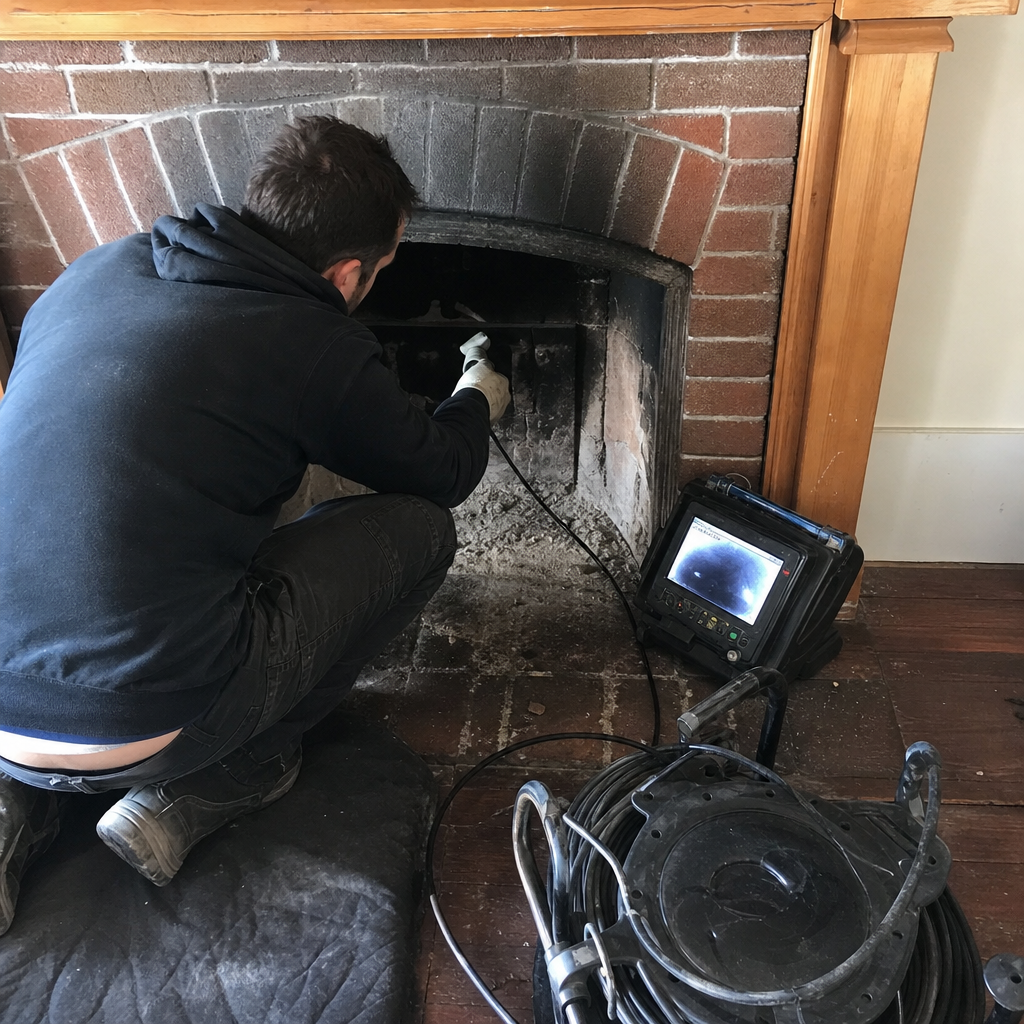
Yes — almost certainly. The original clay-tile liner in your 1960s Lancaster chimney was sized for the hotter, drier exhaust of an oil furnace. Modern high-efficiency gas appliances exhaust cooler, wetter flue gases that condense inside the oversized liner, etching the clay and collapsing mortar joints from the inside out. We see this failure mode constantly in Lancaster’s 14086 zip. A properly sized stainless steel liner — we typically use DuraFlex for these conversions — protects the chimney structure and ensures safe venting. Call (833) 632-3568 and Thomas can inspect your flue with a camera to confirm the condition.
You shouldn’t wait through another heating season. Spalling exposes the inner brick to accelerated water penetration, and Lancaster’s extended freeze-thaw cycle turns minor surface damage into structural compromise within one or two winters. Once the freeze line penetrates past the brick face, the spalling accelerates exponentially. A $350 brick repair in October becomes a $2,500 partial rebuild by the following spring. Call (833) 632-3568 for a free inspection and we’ll show you exactly where your chimney stands.
Yes — flashing repair is one of our most common calls from Lancaster, especially after heavy snow seasons. We remove failed flashing, inspect for hidden water damage in the chase and roof deck, and install new step flashing properly integrated with your roofing system. For Lancaster’s mid-century homes, we often discover the original flashing was never correctly installed. Call (833) 632-3568 to schedule — we carry common flashing configurations for faster turnaround.
For most Lancaster chimneys, standard repointing is the right choice — grinding out failed mortar and packing new type-N or type-S mortar in matching color. Tuckpointing adds a decorative fine-line groove for historic aesthetic replication, which most 1950s–1970s Lancaster homes don’t require. However, if you’re in one of Lancaster’s older established neighborhoods and want to maintain period appearance, tuckpointing preserves that visual character while still sealing the wall against lake-effect moisture. Thomas can assess your mortar condition and recommend the appropriate approach. Call (833) 632-3568 for a free evaluation.
Written by Thomas Hernandez, Owner at Titan Chimney Cleaning Greater Buffalo, serving Lancaster and Greater Buffalo since 2013.