
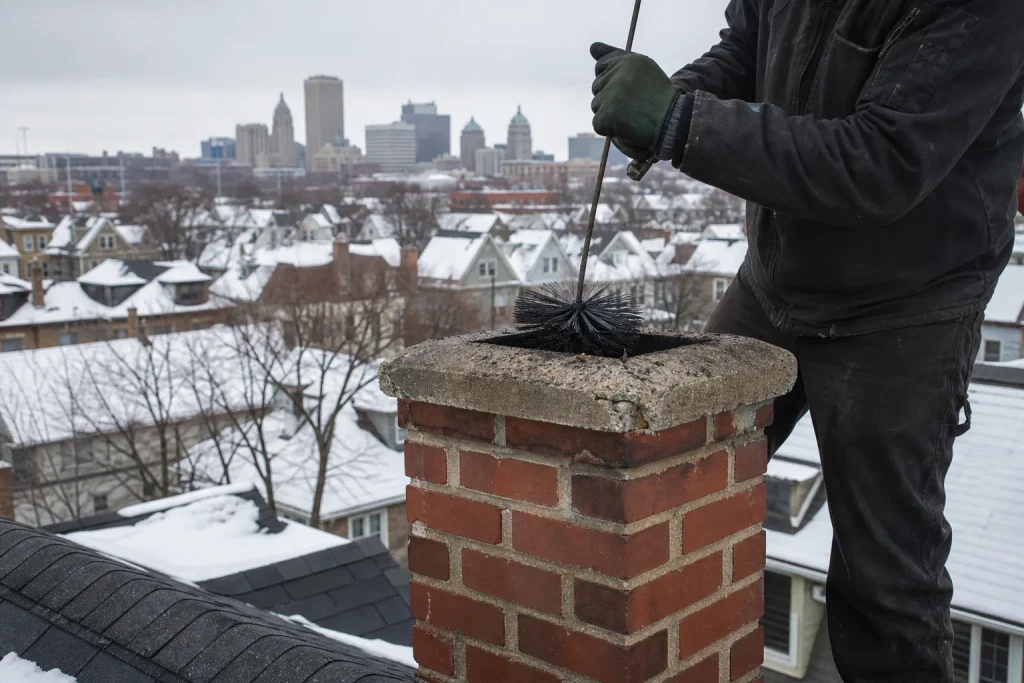
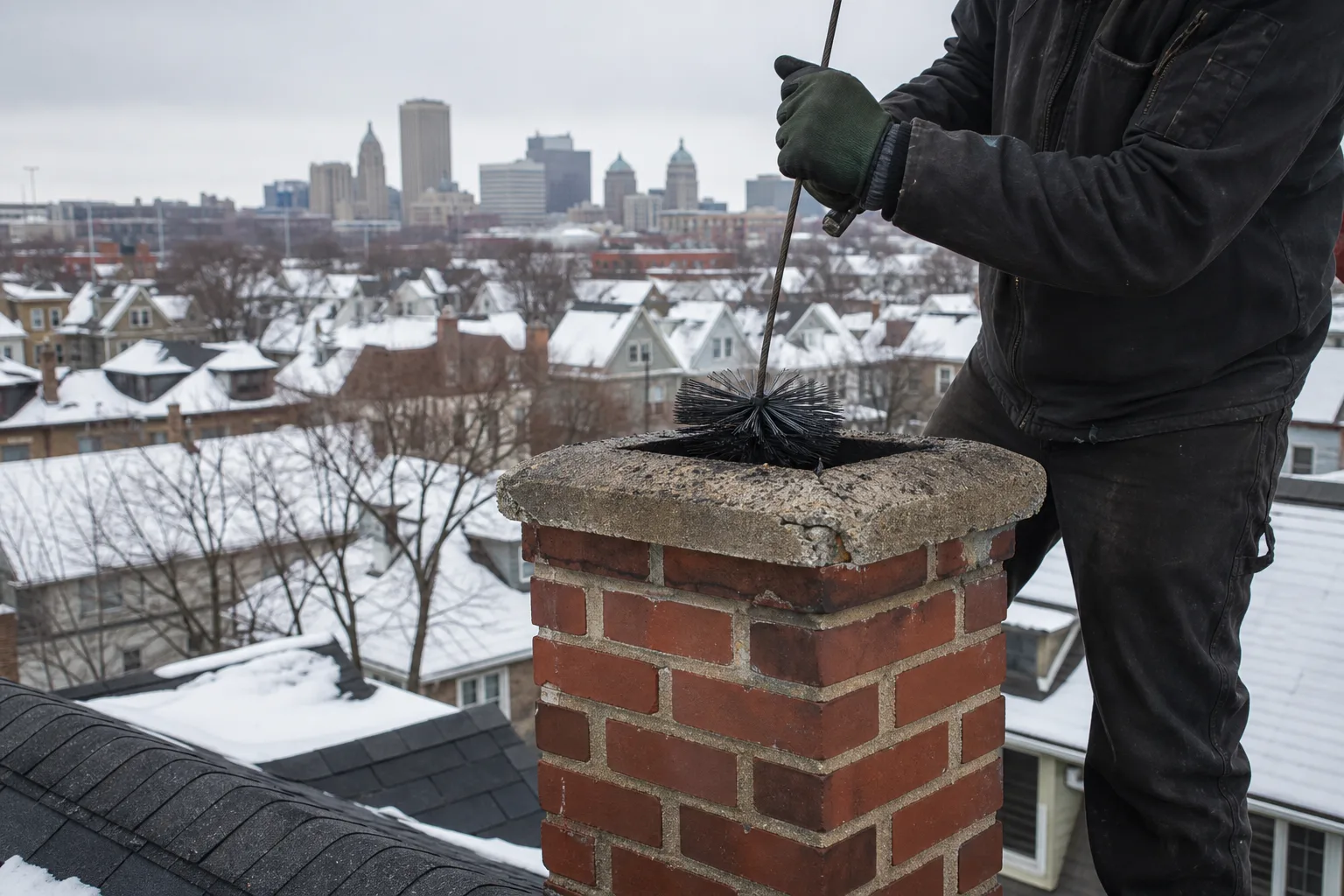
Emergency Chimney Cleaning & Sweep Near Me: What Buffalo Homeowners Should Do First
If you suspect a chimney emergency in Buffalo, stop using the fireplace immediately, ensure your CO detectors are working, and call a certified chimney sweep for a same-day inspection — do not attempt to “burn it out” or diagnose the problem yourself. For actual chimney fires, call 911 first; for smoke backup, strong odors, or visible damage, call (833) 632-3568 and we’ll walk you through immediate safety steps while dispatching Thomas Hernandez to your home.
Here’s the mistake we see every winter in Buffalo: a homeowner notices smoke pouring back into the living room, or catches a whiff of something acrid from the fireplace, and decides to light one more small fire to “see if it clears up.” In 11 years of chimney work across Buffalo, we’ve seen that decision turn a manageable creosote buildup into a full chimney fire. The first 30 minutes after you notice a problem matter more than how fast a technician can arrive.
What’s a True Emergency vs. What’s Urgent but Not Life-Threatening
Not every chimney problem requires a 911 call, but knowing the difference saves lives and prevents unnecessary damage to your Buffalo home.
Call 911 immediately if you experience:
- A loud roaring or rumbling sound from the chimney, accompanied by dense smoke or visible flames at the top — this is an active chimney fire
- Carbon monoxide detector alarms that won’t silence after ventilating the space
- Structural collapse of the chimney exterior, especially after a Western New York windstorm or ice event
Call a chimney sweep same-day (but not 911) for:
- Sudden smoke backup into your living space during normal use
- A persistent burning or chemical odor when the fireplace isn’t in use
- Visible cracks in the firebox, damaged flue tiles, or pieces of masonry in the hearth
- Water leaking down the chimney after heavy Buffalo lake-effect snow or rain
We’ve responded to calls in North Buffalo where a homeowner waited three days on what they thought was “just a smell” — turned out to be a partially blocked flue venting CO into a child’s bedroom. When in doubt, make the call. After 297 jobs across Buffalo’s neighborhoods, we’d rather inspect and find nothing wrong than arrive too late.
The First 30 Minutes: Your Step-by-Step Response
When something goes wrong, Buffalo homeowners need a clear sequence. Panic leads to bad decisions — like opening the damper wider or throwing water on a hot firebox.
If you suspect a chimney fire:
- 1
Evacuate everyone from the home. Chimney fires can spread to wall cavities in minutes.
- 2
Call 911 from outside. Do not re-enter to grab belongings.
- 3
Do not attempt to extinguish the fire yourself. Water on a hot masonry chimney can cause steam explosions and structural cracking.
- 4
After the fire department clears the scene, call us at (833) 632-3568. We perform post-fire safety assessments to determine if the flue, liner, and surrounding structure are intact. In our experience, Buffalo’s older housing stock — especially pre-war brick homes in Elmwood Village and Allentown — is particularly vulnerable to hidden heat damage after a chimney fire.
If you’re dealing with smoke backup or odors (no active fire):
- Stop adding fuel. Let the fire burn down naturally; do not spread embers or attempt to remove burning logs.
- Close the glass doors or fireplace screen, but leave the damper open to allow smoke to exhaust upward once pressure equalizes.
- Open windows on the same level as the fireplace to relieve negative pressure — common in tightly sealed Buffalo homes built after 1990.
- Check that your CO detector is functioning. If it alarms, leave the home and call the fire department.
- Do not relight the fireplace until a technician has inspected the system.
We pulled a bird’s nest out of a flue in Kenmore last month where the homeowner had been “managing” smoke backup for two weeks by burning smaller fires. The nest was fully ignitable — they were one hot burn away from a chimney fire.
How to Safely Shut Down Your Fireplace or Wood Stove
Improper shutdown during a problem can make smoke and fire situations dramatically worse. Here’s what we teach Buffalo homeowners:
For open masonry fireplaces: Close the glass doors or mesh screen, but do not close the damper until the fire is completely out and cold. Closing a hot flue traps heat and combustible gases. If smoke is pouring into the room, the chimney is already drafting poorly — closing the damper forces more smoke into your living space.
For wood stoves and inserts: Close the air intake vents to starve the fire of oxygen, but do not seal the stove airtight. Most modern EPA-certified stoves need some airflow to prevent overheating. Never attempt to remove ashes or unburned wood while the stove is hot — we’ve seen ember spills ignite flooring in Hamburg and West Seneca homes.
For gas inserts: Turn off the gas at the shutoff valve (usually a key valve in the wall or floor nearby), not just the remote or wall switch. If you smell gas — a rotten egg odor — leave immediately, do not operate any switches, and call the gas company from outside.
Safety note: Chimney fires can reach 2,000°F, and the high-tension environment of a compromised flue is not a DIY situation. Our 11 years of exclusive chimney focus means we’ve seen the aftermath of well-intentioned homeowner interventions. Let a trained professional assess structural integrity before you consider using the system again.
What to Have Ready When You Call a Chimney Technician
The faster we understand your situation, the faster Thomas Hernandez can arrive with the right equipment and materials. Here’s what helps us help you:
- Type of heating appliance: Open masonry fireplace, wood stove, pellet stove, or gas insert — each requires different inspection tools
- Fuel you burn: Seasoned hardwood, softwood, pellets, or gas — creosote buildup varies dramatically by fuel type
- When you last had a professional sweep: If it’s been more than a year, or never, we need to plan for a more thorough inspection
- Specific symptoms and timeline: “Smoke started backing up 20 minutes into last night’s fire” tells us more than “it’s not working right”
- Any recent weather events: Buffalo’s freeze-thaw cycles and lake-effect snow can damage caps, crowns, and flashing
- Photos if safe to take: A picture of visible damage, water stains, or debris in the firebox helps us prepare
We stock professional-grade materials from Copperfield, DuraFlex, and HeatShield on our service vehicle, so most repairs don’t require a return trip. When you call (833) 632-3568, you’re talking directly to Thomas — no dispatch center, no scheduling gatekeeper who doesn’t understand chimney systems.
When Is Your Chimney Actually Safe to Use Again?
This is the question we get most often after an emergency call, and the answer is straightforward: you cannot determine this from your living room.
A chimney that looks fine from below can have cracked flue tiles, displaced mortar joints, or heat-compromised liners that are invisible without a camera inspection. After any suspected chimney fire, smoke event, or structural impact, we perform a Level 2 inspection per NFPA 211 standards — this includes video scanning of the entire flue interior.
In Buffalo’s older neighborhoods, we’ve found hidden damage in chimneys that appeared perfectly sound:
- In a 1920s North Buffalo colonial, a chimney fire had cracked the terracotta flue liner three courses above the smoke chamber — invisible without a camera, but venting combustion gases into the wall cavity
- After a windstorm in the Delaware District, a displaced chimney cap allowed water to saturate the liner; the homeowner didn’t notice until we found spalling brick and a deteriorated Gelco-equivalent cap that needed replacement with proper professional-grade materials
We document everything with photos and explain what we found before recommending any repair. Nearly 300 Buffalo-area homeowners have trusted us with this assessment — our 4.7-star average reflects that transparency.
Related services in Buffalo: If your emergency reveals deeper issues, we handle the full scope — from chimney repair in Buffalo to fireplace services in Buffalo and complete liner rebuilds. One company, full chimney.
The Bottom Line
The most dangerous thing you can do after noticing a chimney problem is hope it resolves itself. Stop using the system, ensure your CO detectors are active, and get professional eyes on the flue before lighting another fire. In Buffalo’s heating season — which runs October through April and often longer — chimney emergencies don’t wait for convenient timing.
Key takeaways for Buffalo homeowners:
- Active chimney fire: 911 first, then call us for post-fire assessment
- Smoke backup or odors: stop burning, ventilate, and call for same-day inspection
- Never diagnose chimney safety from a visual check — camera inspection is required
- Have your appliance type, fuel, and symptom timeline ready when you call
If you’re in Buffalo and need help right now, Titan Chimney Cleaning Greater Buffalo offers free estimates — call (833) 632-3568. Thomas Hernandez answers directly and can walk you through immediate safety steps while en route to your home.
Frequently Asked Questions
Emergency chimney cleaning in Buffalo typically ranges from $200–$400 depending on accessibility, creosote buildup severity, and whether a Level 2 camera inspection is needed. Same-day or after-hours service may carry a modest premium. Call (833) 632-3568 for an exact quote — estimates are free.
Yes — we prioritize same-day response for active smoke backup, suspected chimney fires, and CO concerns. Thomas Hernandez handles scheduling directly, so we don’t lose time through a dispatch center. For true chimney fires, call 911 first, then call us for the post-fire safety inspection.
Most post-emergency damage is repairable. A cracked flue liner can often be relined with DuraFlex stainless steel rather than rebuilding the chimney. We only recommend full rebuilds when structural integrity is compromised — after 11 years in Buffalo chimneys, we’ve learned that targeted repair saves homeowners thousands over unnecessary replacement. Call for a free assessment.
You don’t — not without a professional camera inspection. Small chimney fires often cause hidden flue tile cracks or liner damage that allows heat and gases into wall cavities. We perform NFPA 211 Level 2 inspections with video documentation to confirm your system is safe before you burn again. Never rely on visual checks from the firebox.
Written by Thomas Hernandez, Owner & Lead Technician at Titan Chimney Cleaning Greater Buffalo, serving Buffalo since 2015.
Need Chimney Cleaning Help?
Call Titan Chimney Cleaning Greater Buffalo — licensed & insured, here with fast after-hours help in Buffalo.
(833) 632-3568