
Chimney Liner Installation Cost in Buffalo, NY: What You’ll Actually Pay and Why It Varies
In Buffalo, chimney liner installation typically runs $2,800–$6,500 for a standard single-flue flexible stainless steel liner, with most homeowners landing in the $3,500–$4,800 range for a complete install including insulation wrap, top termination, and proper connection to the appliance. Rigid stainless liners cost more upfront at $4,200–$7,800 but last longer in straight flues, while HeatShield resurfacing for intact but cracked clay tile runs $1,800–$3,200 when the flue is salvageable. Call (833) 632-3568 for a free, on-site estimate — Thomas Hernandez handles every inspection personally, and the spec isn’t finalized until he’s seen inside your flue.
Buffalo’s housing stock tells a story most liner cost guides ignore. The brick Victorians and early-20th-century frame homes that dominate neighborhoods from the East Side to Elmwood Village were built with coal-era flues — typically 12×12 inches or larger — then converted to oil or gas decades later. That mismatch between flue size and modern appliance output is the single biggest factor driving both cost and long-term value here. We’ve pulled failed liners out of South Buffalo chimneys where the “savings” of skipping proper sizing cost the homeowner a second install seven years later. If you’re searching for chimney liner & rebuild near me in Buffalo, NY, make sure whoever you hire measures before quoting.
Why Buffalo’s Coal-Era Flues Change the Math on Liner Cost
Here’s what eleven years of liner work across Greater Buffalo has taught us: the liner itself is rarely the problem. The problem is the empty space around it.
A 12×12-inch coal flue connected to a modern 80,000 BTU gas furnace leaves roughly 30–50% of the cross-sectional area unused. That oversized chamber creates slow draft, incomplete combustion, and — most critically — condensation. Flue gases cool before they exit, moisture condenses on the liner surface, and that acidic condensate eats through stainless steel in half its rated life. We’ve seen uninsulated flexible liners in oversized Buffalo flues fail in seven years, not the twenty-plus years the manufacturer warrants.
The fix isn’t always a bigger liner. It’s the right liner, properly specified:
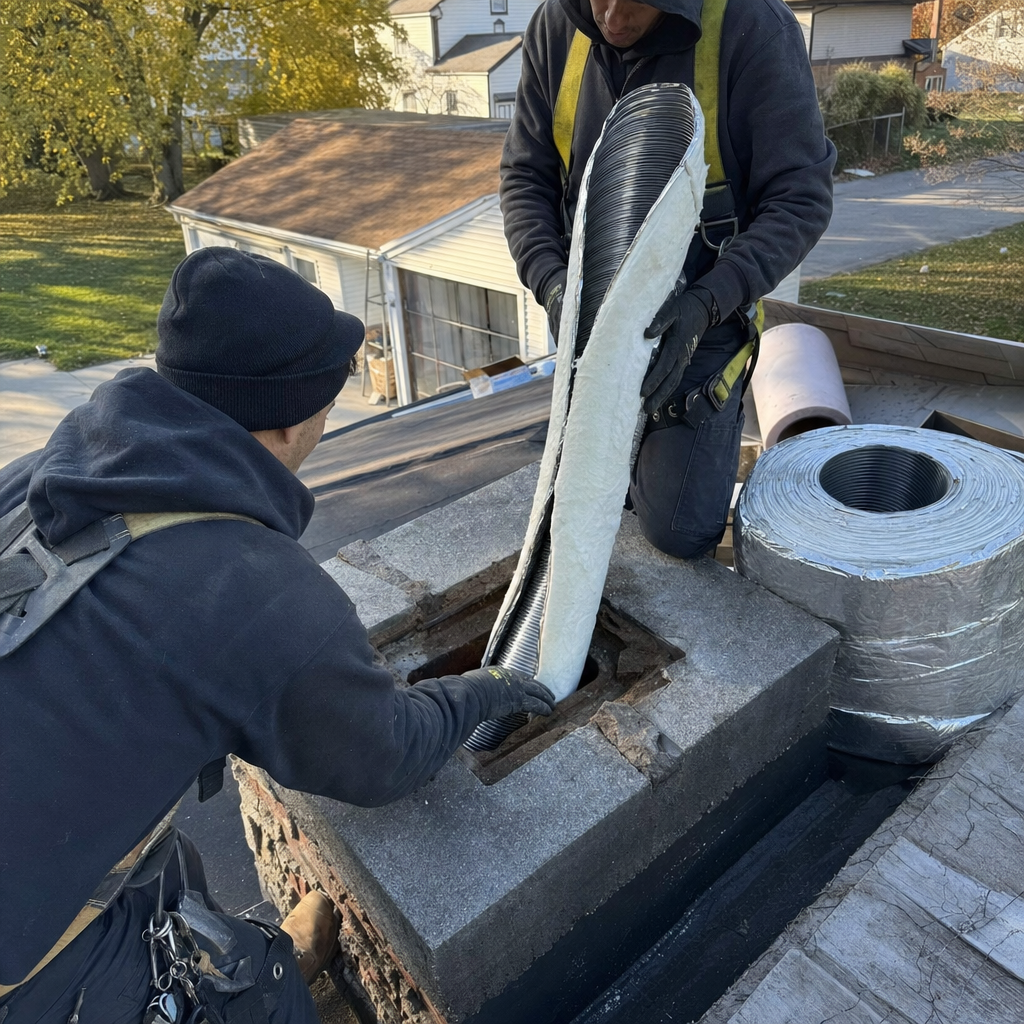
- Insulated flexible liners — DuraFlex and Olympia Chimney systems with 1/4-inch or 1/2-inch insulation wrap maintain flue gas temperature, prevent condensation, and meet NFPA 211 standards for zero-clearance installations. In Buffalo’s freeze-thaw climate, this matters more than in milder regions.
- Correct diameter matching — We size to the appliance’s BTU output and venting requirements, not “what fits.” A 6-inch round liner in a 12×12 flue with proper insulation performs; a 6-inch liner rattling around in empty space does not.
- Top termination design — Professional-grade rain caps with integrated spark arrestors, not big-box hardware-store covers. After lake-effect dumps of 2–3 feet, we’ve found cheap caps packed with snow and ice, blocking the flue entirely. That’s a carbon monoxide backdraft waiting to happen.
The extra material and labor for insulation and proper termination adds $600–$1,400 to the base liner cost. But it’s the difference between a liner that lasts two decades and one that fails before you’ve paid it off.
Chimney Liner Installation Cost Breakdown for Buffalo Homes
Every flue is different, but after nearly 300 jobs across Buffalo, we’ve seen enough patterns to give realistic ranges. These assume a typical single-story or two-story masonry chimney in Buffalo’s pre-WWII housing stock, with safe access and no major structural rebuild needed.
| Liner Type & Application | Typical Cost Range | Best For |
|---|---|---|
| Flexible stainless steel liner (basic, uninsulated) | $2,800–$3,800 | Straight flues, proper existing sizing, warm-climate regions (not our first recommendation for Buffalo) |
| Flexible stainless steel liner with insulation wrap | $3,500–$5,200 | Most Buffalo installations — coal-era oversized flues, gas/oil appliances, freeze-thaw protection |
| Rigid stainless steel liner | $4,200–$7,800 | Straight or near-straight flues, wood-burning applications, maximum durability |
| HeatShield cerfractory resurfacing | $1,800–$3,200 | Clay tile intact but cracked, no sizing mismatch, flue structurally sound |
| Insulation wrap upgrade (add-on) | $600–$1,100 | Required for most Buffalo installs; included in insulated flexible range above |
| Top termination & rain cap (professional-grade) | $280–$550 | Essential in Buffalo’s snowbelt; Gelco and Famco systems we specify handle lake-effect loads |
| Appliance connection & labor | $450–$850 | Varies by appliance type and access |
These ranges reflect what we quote after Thomas Hernandez has inspected the flue in person — not phone estimates based on square footage. We’ve seen too many “competitive” quotes in this market that specify a liner from a catalog without measuring the actual flue, checking the appliance output, or accounting for Buffalo’s wet, freeze-thaw cycling. That approach saves maybe $400 upfront and costs $3,000-plus in premature replacement.
When HeatShield Resurfacing Beats Full Liner Replacement
Not every cracked flue needs a new liner. HeatShield’s cerfractory mixture — a ceramic-refractory compound — bonds to existing clay tile, sealing minor cracks and restoring a smooth, insulated surface. At $1,800–$3,200, it’s roughly half the cost of flexible stainless in many applications.
The catch: HeatShield only works when the flue is already properly sized for the appliance and the tile is structurally intact. In Buffalo’s coal-converted housing stock, that’s rare. We evaluate this on every inspection, and we’ll tell you straight when resurfacing is viable versus when you’re throwing good money at a fundamentally mismatched system. If I wouldn’t let my own family light that fireplace, I’m going to tell you straight.
The brands we work with matter here. HeatShield’s system requires factory-certified application — it’s not a DIY patch. Thomas Hernandez trained on the proper spray-and-smooth technique, and the warranty is only valid when an approved technician does the work. Same with DuraFlex and Olympia Chimney liners: the manufacturer’s 20-year warranty requires professional installation with documented sizing calculations.
What Drives Liner Cost Higher in Buffalo Specifically?
Three factors push Buffalo installs toward the upper end of national ranges:
Freeze-thaw damage to the chimney structure itself. With 80–100 freeze-thaw cycles per season and lake-effect snow repeatedly saturating mortar joints, we often find spalled brick, deteriorated crowns, or compromised flue tiles that must be addressed before a liner can be safely installed. A liner in a structurally failing chimney is a liner that will fail. Crown repair or partial rebuild adds $800–$2,500 to the project.
Access challenges in dense neighborhoods. Narrow lots in Elmwood Village, tight alleyways on the West Side, or steep-pitched roofs on East Side doubles can require specialized rigging or additional labor hours. We price this honestly after seeing the site — never as a surprise add-on.
The oversized-flue correction itself. Properly insulating and sizing a liner for a 12×12 coal flue serving a modern gas insert takes more material and more time than a straightforward like-for-like replacement. But skipping this step is what produces the seven-year failures we’ve documented across South Buffalo and the southtowns.
How Long Does a Properly Installed Liner Last in Buffalo’s Climate?
This is where spec matters more than brand marketing. A 316Ti stainless flexible liner, properly insulated and terminated, is rated for 20-plus years in ideal conditions. In Buffalo’s actual conditions — wet lake-effect snow, aggressive freeze-thaw, acidic condensate from high-efficiency gas appliances — we’ve found that uninsulated liners in oversized flues average 7–10 years before corrosion-through. Insulated, properly sized installs with professional-grade top terminations are tracking toward 18–22 years in our follow-up inspections.
That lifespan difference is the real cost calculation. A $3,200 uninsulated install replaced twice in twenty years costs $6,400. A $4,600 insulated install done once costs $2,200 less over the same period — and performs better throughout.
FAQs
Most Buffalo homeowners pay $3,500–$4,800 for a complete flexible stainless steel liner installation with insulation, top termination, and appliance connection, though costs range from $2,800 for basic uninsulated installs to $7,800 for rigid stainless in complex applications. We also offer affordable chimney liner & rebuild in Buffalo, NY with financing options for qualifying homeowners. The biggest variable is whether your chimney has an oversized coal-era flue that requires insulation and proper sizing to prevent premature failure. Call (833) 632-3568 for a free on-site estimate — we don’t quote final prices without seeing your flue.
HeatShield resurfacing at $1,800–$3,200 is cheaper than full liner replacement when your clay tile is intact and properly sized for your appliance, but most Buffalo homes with coal-era flues need the sizing correction that only a new liner provides. We evaluate this on every inspection and recommend resurfacing only when it’s genuinely the better long-term value. If you’re unsure which applies to your chimney, (833) 632-3568 gets Thomas Hernandez on-site for an honest assessment.
Yes, we install liners year-round in Buffalo, though extreme cold below 15°F can delay mortar or refractory work if crown repair is needed alongside the liner. Lake-effect snow events sometimes block access for a day or two, but we schedule around forecasts and prioritize jobs where the existing flue has been red-tagged or poses immediate safety concerns. For winter scheduling, call (833) 632-3568 — we keep slots open for urgent installs.
The biggest price gaps come from whether the quote includes proper sizing analysis, insulation, and professional-grade termination hardware — or just drops a basic flex liner into the flue and calls it done. We’ve removed failed liners from Buffalo chimneys where the “savings” skipped insulation in an oversized flue, condemning the liner to early corrosion. Thomas Hernandez specifies every job based on actual flue measurements and appliance ratings, not a phone script. For a spec that matches your chimney’s real conditions, call (833) 632-3568.
Getting an Accurate Quote for Your Buffalo Chimney
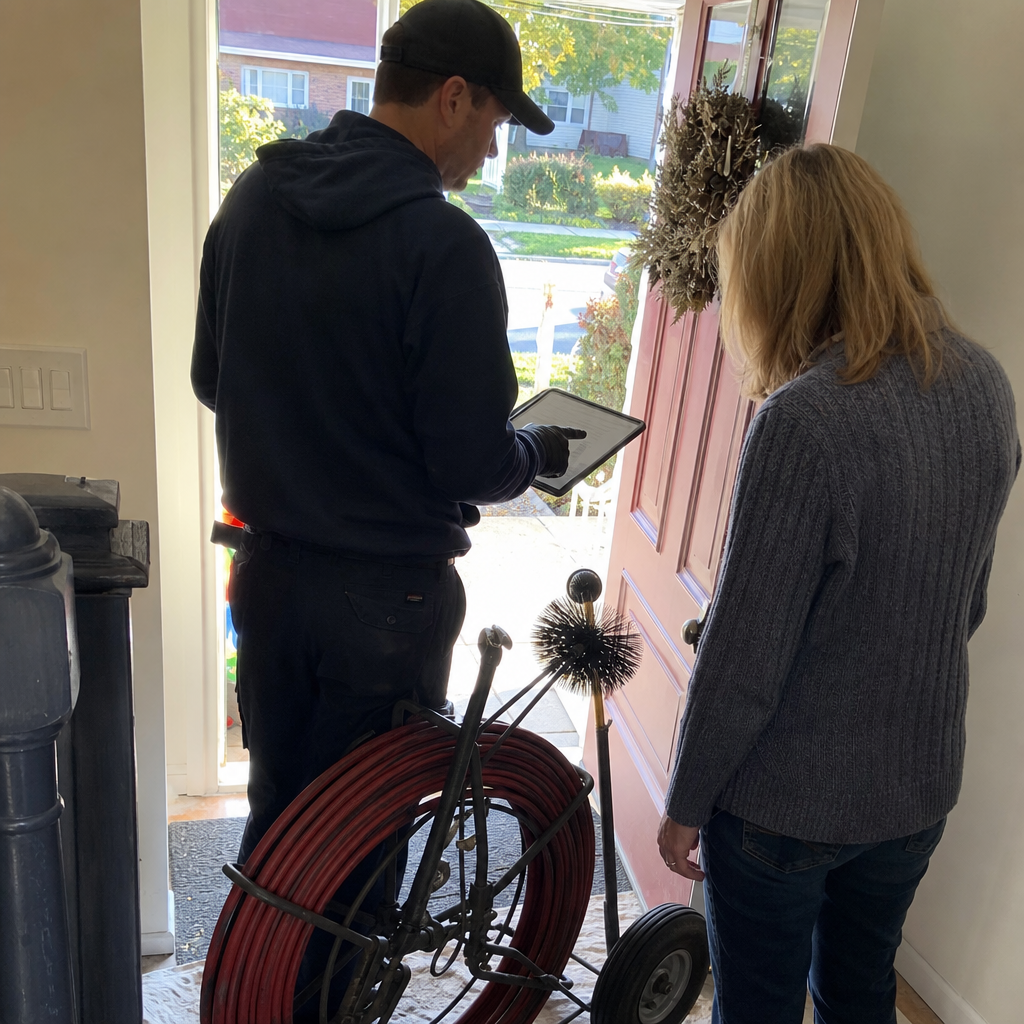
Every liner installation we do starts with a Level 2 inspection — camera scan of the flue interior, measurement of all dimensions, documentation of the appliance make and model, and assessment of the chimney structure for crown, cap, and mortar condition. Thomas Hernandez performs this personally; there’s no sales intermediary between your chimney and the person who’ll specify and install the liner.
That inspection costs nothing when you move forward with the work, and it protects you from the most common and expensive mistake in this market: a liner that fits the flue but not the system. In eleven years and nearly 300 jobs across Greater Buffalo, we’ve built our reputation on specs that last — not quotes that undercut on paper and cost double in practice.
Ready to know what your chimney actually needs? Call (833) 632-3568 or visit our home page to schedule your free inspection. We’ll show you what the camera sees, explain the options that fit your flue and your budget, and install only what we’d stand behind in our own homes.
For more detail on our full liner and rebuild capabilities, see our Chimney Liner & Rebuild service page.
Written by Thomas Hernandez, Owner & Lead Technician at Titan Chimney Cleaning Greater Buffalo, serving Buffalo, NY.