
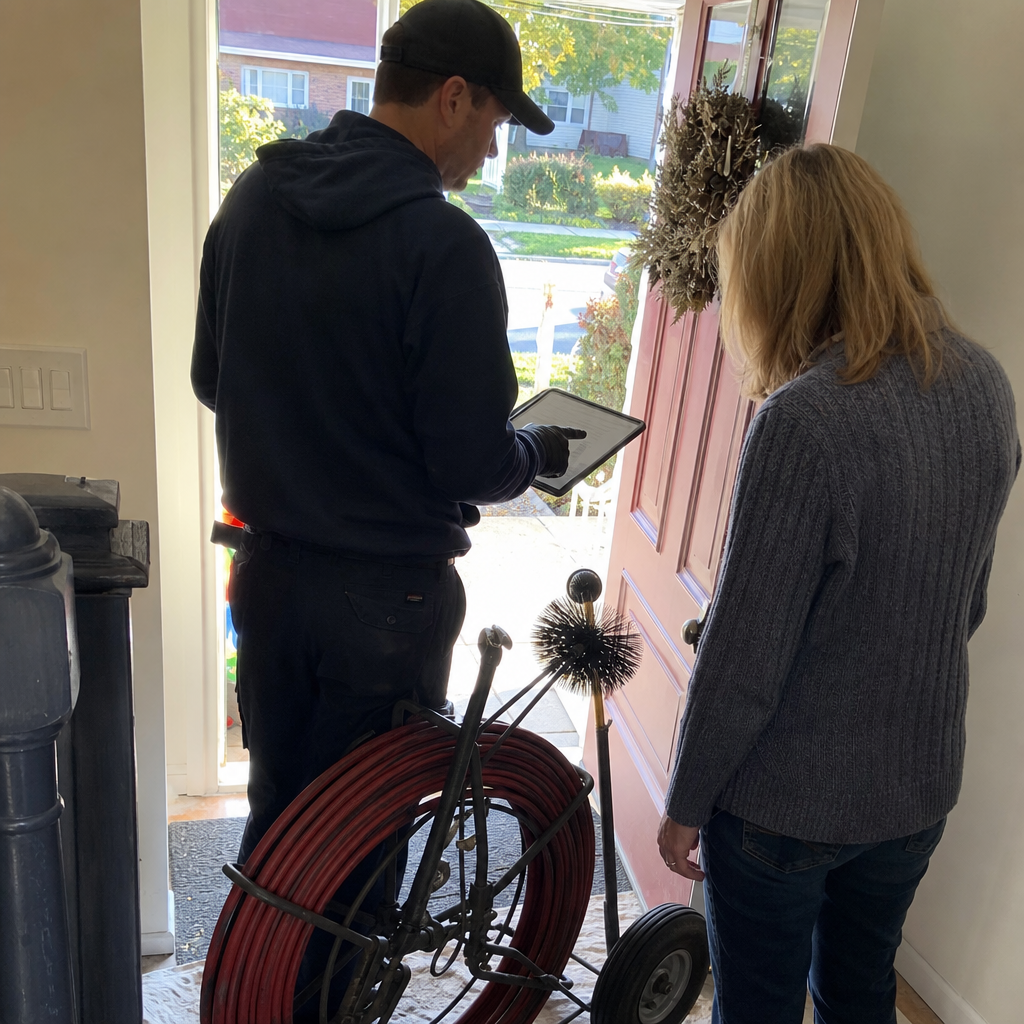
Chimney Cleaning Cost in Buffalo, NY: What You’ll Actually Pay
A standard chimney cleaning in Buffalo typically runs $180–$280 for a Level 1 sweep on a well-maintained flue, while Level 2 cleanings with video inspection range $250–$450. Homes in Buffalo’s pre-war neighborhoods—East Side, Elmwood Village, South Buffalo—often need more intensive work because their original coal-era chimneys create conditions national pricing guides don’t account for. Call (833) 632-3568 for a free, upfront quote before we start any work.
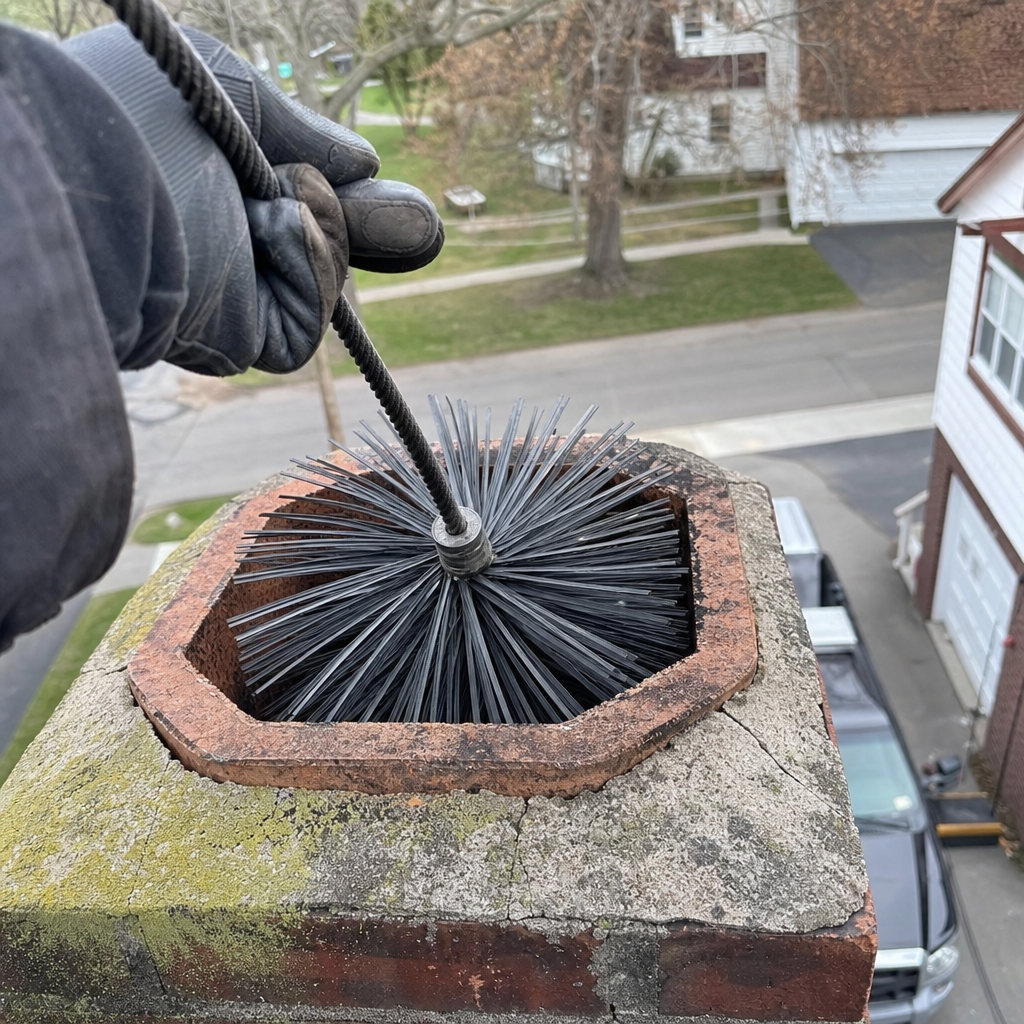
Last March, Thomas Hernandez pulled a broken chimney cap off a 1924 Dutch Colonial in Elmwood Village and found the flue packed with what looked like tarred coffee grounds—third-stage glazed creosote that had been baking for three seasons. The homeowner had been quoted $149 for a “standard sweep” by a door-to-door company the year before. They took the money, ran a brush down once, and left the real problem. That $149 flat rate didn’t cover what Buffalo’s housing stock actually required. If I wouldn’t let my own family light that fireplace, I’m going to tell you straight.
Why Buffalo’s Old Chimneys Break the National Pricing Model
Buffalo’s peak building era—roughly 1880 to 1930—left us a dense inventory of brick Victorians, Queen Annes, and early frame homes with original multi-flue masonry chimneys. These were built for coal furnaces. When heating oil and then natural gas arrived, homeowners converted appliances without resizing flues. The result: an oversized liner for a low-output appliance that never generates enough heat to establish a complete draft.
Here’s what that mismatch does inside your chimney:
- Incomplete draft pulls combustion gases slowly, letting them cool and condense on flue walls
- Condensation mixes with soot to form acidic, sticky creosote that standard brushes won’t remove
- That creosote hardens through Buffalo’s 80–100 annual freeze-thaw cycles, layer by layer
- By year three, you’re looking at glazed creosote requiring chemical treatment or mechanical removal—not a basic sweep
We’ve seen this pattern repeatedly across the East Side, where original two-flue chimneys serve both a modern gas furnace and a decorative fireplace the homeowner wants to use. The furnace flue runs cool and wet; the fireplace flue, when finally lit, sends smoke into the house because the shared masonry mass is too cold to establish proper draw. Thomas grew up on Buffalo’s West Side, a few blocks from Olmsted’s Delaware Park, and he’s lost count of how many times he’s explained to a homeowner why their grandfather’s chimney doesn’t behave like the one in a suburban new-build.
This isn’t a corner-case problem. In Buffalo’s pre-WWII housing stock, the flue-to-appliance mismatch turns what national articles call a “standard cleaning” into a two-visit job: one to assess and treat glazed creosote, a second to complete mechanical removal once the chemical agent has broken it down. That’s why our pricing starts with inspection, not a flat-rate assumption.
What NFPA 211 Cleaning Levels Mean for Your Bill
The National Fire Protection Association defines three levels of chimney cleaning. Most Buffalo homeowners assume they’ll need Level 1. Thomas’s 11 years in exclusively chimney work—one trade, no handyman sidelines—have taught him to assess honestly which level your system actually requires.
| Service Level | What’s Included | Typical Buffalo Cost Range |
|---|---|---|
| Level 1 – Routine Sweep | Visual inspection, standard brush/vacuum cleaning of accessible flue, basic firebox check | $180 – $280 |
| Level 2 – Diagnostic Cleaning | Video scan of full flue interior, creosote stage assessment, crown/cap/mortar inspection, written condition report | $250 – $450 |
| Level 3 – Restorative Cleaning | Full access to concealed areas, removal of components if needed, structural assessment, often paired with repair quote | $400 – $800+ |
Level 1 covers the annual maintenance sweep on a system that’s been regularly serviced, burns properly seasoned hardwood, and shows no draft issues. In Buffalo, Thomas finds maybe 30% of first-time calls qualify for true Level 1 pricing. The rest—especially homes with original masonry chimneys in South Buffalo or the Fruit Belt—need Level 2 from the start because we won’t know what we’re dealing with until the camera goes up.
Level 2 is where the coal-to-gas conversion problem reveals itself. The video scan shows condensation staining, spalling flue tiles, or that glazed creosote the cheap sweep missed. We document everything, explain what we’re seeing on the monitor while you’re watching, and quote repair work separately if needed. No surprise add-ons after we’re on the roof.
Level 3 is rare but necessary when a chimney fire has occurred, when structural damage is suspected, or when previous work was done without proper access. We’ve used Level 3 protocols on homes in Hamlin and East Aurora where lake-effect ice buildup had forced water behind the crown, freezing and thawing until interior flue tiles cracked and shifted. The cleaning becomes part of a broader damage assessment.
The Equipment Difference: Why Tool Quality Affects Your Total Cost
A chimney cleaning cost isn’t just labor hours. It’s whether the right equipment exists to do the job in one visit.
Titan Chimney Cleaning uses professional-grade equipment from Copperfield and Gelco—brands that supply certified chimney professionals, not big-box retail channels. Our rotary cleaning systems run at controlled speeds with poly or chain whips sized to your flue diameter, not the one-size-fits-all brushes that leave significant residue. For glazed creosote, we apply Copperfield’s Poultice Creosote Remover or similar professional chemical treatments that require 12–24 hours to break down the deposit before mechanical removal.
Consumer-grade equipment or untrained operators often skip this step. They brush until the flue looks passable from below, leave the hardened layer in place, and the homeowner pays again the following year when buildup has accelerated. Thomas’s approach: do it thoroughly once, document the condition, and set an honest maintenance interval based on what your specific system requires.
This matters for Buffalo’s climate specifically. Our position directly downwind of Lake Erie subjects masonry chimneys to among the most punishing freeze-thaw cycling of any major U.S. city. Wet lake-effect snow saturates mortar joints that then refreeze, accelerating spalling and crown deterioration. A chimney that passed visual scrutiny in October can have open mortar joints and cracked crowns by April. Annual cleaning here is inseparable from structural inspection—something a $149 flat-rate sweep simply doesn’t cover.
When “Chimney Cleaning” Becomes Chimney Repair: Cost Signals to Watch
Sometimes the cleaning reveals problems that change the scope. We don’t upsell; we show you what the camera sees and let you decide. But these conditions, common in Buffalo’s older neighborhoods, typically mean your “cleaning” visit will include a repair quote:
- Spalled or missing flue tiles: The clay liner inside your chimney cracks from thermal shock or freeze-thaw stress. Gaps expose combustible framing to heat and sparks. HeatShield cerfractory flue sealant or a stainless DuraFlex liner replacement may be needed.
- Crown cracks with exposed rebar: Buffalo’s freeze-thaw cycles destroy poured concrete crowns in 10–15 years if not properly sealed. Water enters, freezes, and the crown lifts away from the brick. We rebuild with proper overhang and drip edge, or install a Gelco or Famco cap with integrated crown protection.
- Deteriorated mortar joints (“tuckpointing needed”): Open joints let water into the wall cavity. In a city where 150-inch snowfalls happen in the southtowns, that’s a structural emergency, not cosmetic.
- Improperly sized flue liner: The coal-to-gas mismatch. Sometimes correctable with a stainless liner insert; sometimes requires more extensive rebuilding.
Repair work is quoted separately, with material specs—DuraFlex for liners, HeatShield for resurfacing, Olympia Chimney components where specified—so you know what you’re paying for. Thomas makes those calls on site; there’s no sales team, no commission structure, no pressure to add work you don’t need.
What Drives Price Variation Within Buffalo
Even within Erie County, chimney cleaning cost varies based on factors specific to your home:
| Cost Factor | Low-End Impact | High-End Impact |
|---|---|---|
| Chimney height/accessibility | Single-story, good roof pitch: standard rate | Three-story Victorian, steep slate, or limited ladder access: +$50–$120 |
| Flue condition/creosote stage | Dry, powdery soot: Level 1 pricing | Glazed or third-stage creosote: chemical treatment + second visit, +$150–$300 |
| Number of flues/appliances | One fireplace flue | Two or three flues (fireplace + furnace + water heater): each additional flue +$80–$150 |
| Cap/crown condition | Intact, properly installed | Missing or damaged, requiring removal/replacement during visit: +$200–$600 for cap, $400–$1,200 for crown rebuild |
| Seasonal timing | Mid-summer booking: standard availability | October–November rush: potential scheduling premium, though we don’t surcharge |
After major lake-effect dumps, we regularly find flue openings and chimney caps packed solid with wind-driven snow and ice—blocking combustion gases and creating carbon monoxide backdraft conditions. It’s a failure pattern virtually unknown in most of the country but recognizable here, particularly on the lee faces of chimneys in Orchard Park, Hamburg, and West Seneca. Emergency clearing of these blockages requires immediate response and may fall outside standard cleaning scope.
The Flat-Rate Trap: Why We Don’t Quote Blind
Thomas has been called to too many homes where a “$99 chimney sweep special” turned into a $600 bait-and-switch, or where the low price meant the job wasn’t actually done. Our process: we ask about your home’s age, heating appliances, and last service date when you call. Thomas shows up personally, does a preliminary visual assessment, and gives you a firm quote before any work begins. If the scope changes because we find something unexpected, we stop and explain.
Nearly 300 homeowners have trusted us across 11 years in this single trade. Our 297 verified reviews at a 4.7-star average reflect that consistency—repeatable results from an owner who does the work himself, not a rotating crew with no stake in the outcome. One company, full chimney: from routine Chimney Cleaning & Sweep to cap installation to full liner replacement, you never need a second contractor.
FAQs
Most Buffalo homeowners pay between $180 and $450 for professional chimney cleaning, depending on whether their system needs a basic Level 1 sweep or a Level 2 inspection with video scan. Homes in pre-1940 neighborhoods like Elmwood Village or the East Side often fall toward the higher end because original coal-era chimneys require more intensive work. Call (833) 632-3568 for a free estimate—we’ll give you a firm quote after seeing your specific system.
Resurfacing a sound but cracked clay flue with HeatShield typically costs $1,200–$2,500, while a full stainless steel liner replacement with DuraFlex runs $2,500–$5,000 depending on flue length and diameter. Repair is cheaper when the existing structure is fundamentally intact; replacement is necessary when tiles are missing, shifted, or the flue is improperly sized for the appliance. Thomas assesses this with a video scan during your cleaning visit and explains which option matches your budget and safety needs.
The NFPA recommends annual inspection for all chimney systems, with cleaning frequency based on use and fuel type. In Buffalo’s climate, Thomas advises annual cleaning for wood-burning fireplaces that see regular winter use, and at minimum biennial inspection for gas or oil systems—because our freeze-thaw cycles and lake-effect moisture accelerate masonry deterioration regardless of fuel type. A system that “looks fine” from the hearth can have hidden crown damage or flue deterioration that only a camera inspection reveals.
We prioritize emergency calls for carbon monoxide backdraft risks, chimney fires, or post-storm blockages when our schedule allows—call (833) 632-3568 and we’ll tell you honestly if we can reach you today or if you need to contact fire department emergency services first. For non-emergency cleaning, we typically book 3–7 days out in summer, 1–2 weeks in peak fall season. Booking your annual service in August or September avoids the October rush and ensures your system is verified safe before the first heating cycle.
Get Your Exact Chimney Cleaning Cost in Buffalo
Don’t guess based on national averages that don’t account for Buffalo’s coal-era housing stock, punishing lake-effect winters, or the flue-sizing problems Thomas encounters weekly—instead, find chimney cleaning and sweep near you in Buffalo, NY with local expertise across the East Side, Elmwood Village, and South Buffalo. One call gets you an owner-operator on your roof—not a subcontracted crew—with professional-grade Copperfield and Gelco equipment, an honest scope assessment, and a firm quote before any work begins. Free estimates, no surprise add-ons, and the peace of mind that comes from 11 years of exclusive chimney focus.
Call Titan Chimney Cleaning Greater Buffalo at (833) 632-3568 today for your free chimney cleaning estimate.
Written by Thomas Hernandez, Owner & Lead Technician at Titan Chimney Cleaning Greater Buffalo, serving Buffalo, NY.