
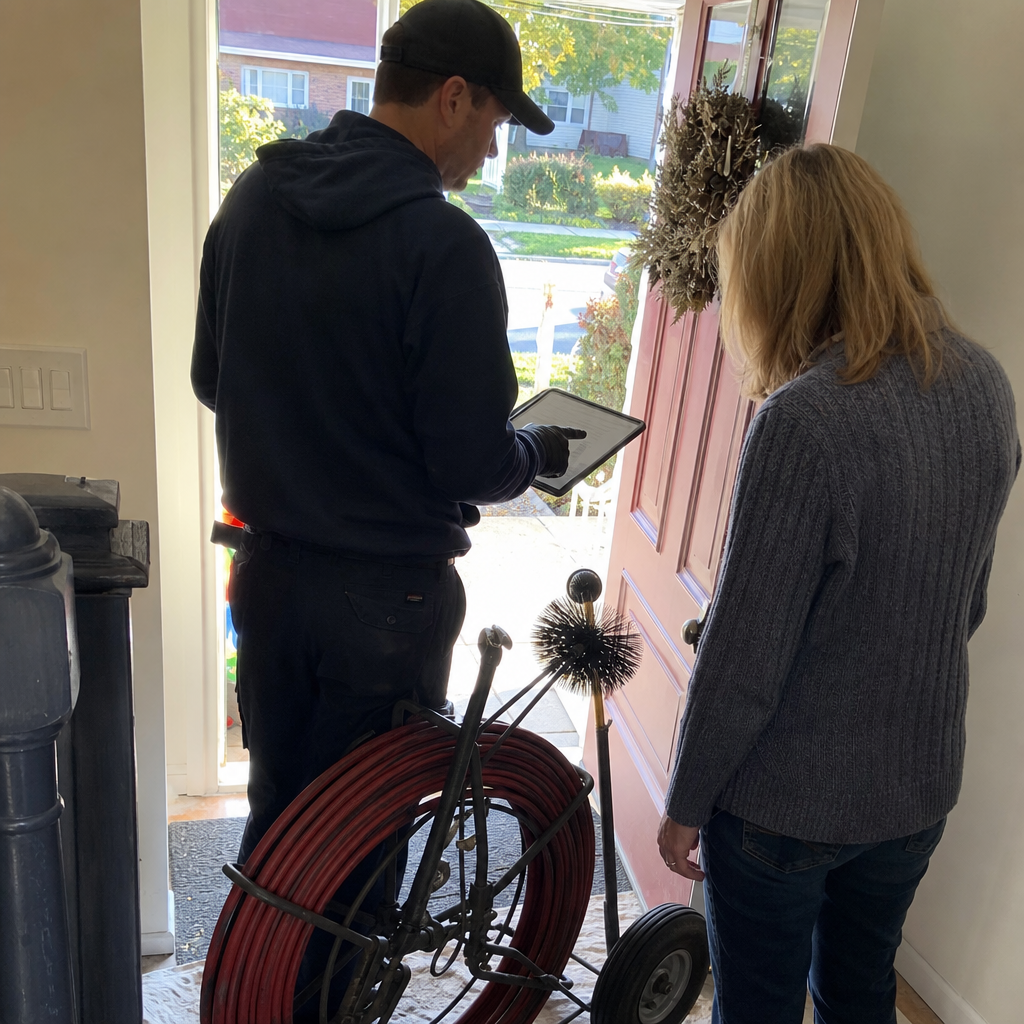
How Much Does a Chimney Sweep Cost in Buffalo, NY?
A professional chimney sweep in Buffalo typically runs between $180 and $320 for a standard cleaning with inspection, though older homes with coal-converted flues or active creosote buildup can push toward $400–$500. Call (833) 632-3568 for a free, exact quote — Thomas Hernandez, owner and lead technician at Titan Chimney Cleaning Greater Buffalo, shows up personally to assess your chimney’s condition before any work begins.
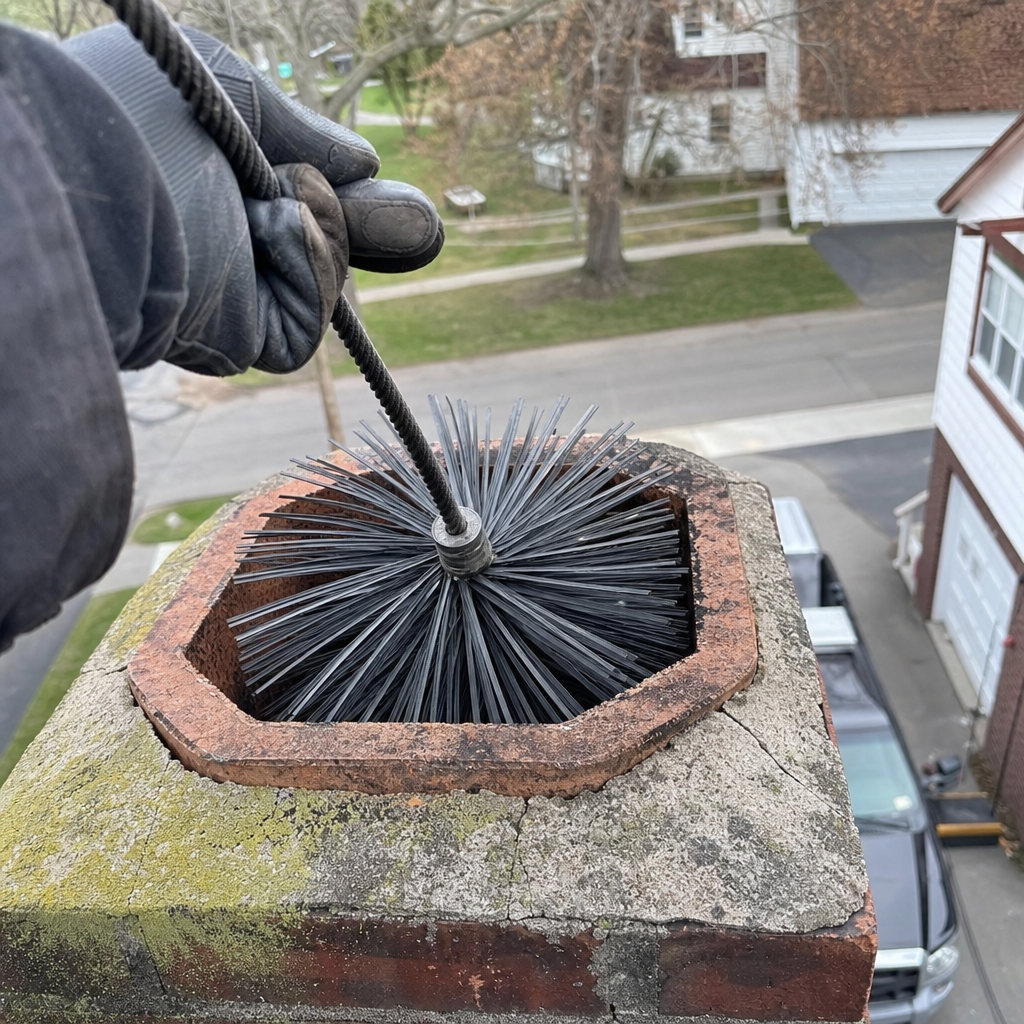
Here’s the honest answer most Buffalo homeowners don’t hear until it’s too late: the sweep fee itself is usually the smallest number on the ticket. In a city where 80–100 freeze-thaw cycles every winter tear through century-old mortar, a technician who vacuums out your flue without inspecting the crown, the liner, and every horizontal mortar bed has done half a job. We’ve pulled into driveways in North Buffalo after lake-effect dumps and found chimneys that looked fine in October now sporting cracked crowns and open joints that would’ve gone unnoticed until water started hitting the attic rafters come spring — classic signs your chimney needs cleaning in Buffalo, NY that too many homeowners miss. That’s why our sweep visits include a full structural inspection — not as an upsell, but as the whole point of having someone qualified on your roof.
What a Buffalo Chimney Sweep Actually Costs — and What’s Included
Not all sweep visits are built the same, and in Buffalo’s housing stock, that distinction matters more than most places. The city built the bulk of its homes between 1880 and 1930, which means multi-flue masonry chimneys originally sized for coal furnaces, later converted to oil or gas, with flue liners that are often oversized for modern appliances. That mismatch causes condensation, poor draft, and accelerated creosote accumulation — problems a basic brush-and-vacuum sweep won’t catch or solve.
Here’s how Titan structures our sweep pricing, with line-item ranges so you know exactly what you’re paying for:
| Service Item | Price Range |
|---|---|
| Standard chimney sweep with Level 1 inspection | $180 – $320 |
| Heavy creosote removal (Stage 2–3 glaze) | $320 – $450 |
| Coal-converted flue with oversized liner assessment | $280 – $400 |
| Chimney cap/crown inspection and minor sealing | $150 – $280 (if needed, added to sweep) |
| Video scan of flue liner (Level 2 inspection) | $200 – $350 additional |
| Post-winter damage assessment (spring booking) | $220 – $380 |
The low end of our range covers a straightforward annual sweep on a well-maintained system — think a gas insert in a newer West Seneca ranch with a properly sized liner. The high end reflects what we encounter regularly in Elmwood Village Victorians or East Side brick homes: oversized flues from coal conversions, heavy glazed creosote from smoldering fires, and frost-heaved crowns that need immediate attention before the next heating season.
What separates our visit from a flat-rate franchise quote is what happens in the first ten minutes. Thomas Hernandez climbs the roof personally — he’s the one doing the sweep, not supervising a rotating crew — and checks the crown, the cap, the flashing, and the mortar joints before ever dropping a brush. In Buffalo, that sequence is non-negotiable. We’ve found chimneys in South Buffalo where wind-driven lake-effect snow had packed the flue solid, creating a carbon monoxide backdraft risk the homeowner had no idea existed. That’s not a cleaning problem; it’s a safety problem, and it only gets caught when the person on the roof knows what they’re looking at.
Why Buffalo’s Climate Makes the Inspection the Real Service
Buffalo sits directly downwind of Lake Erie, and that geography imposes a wear pattern on chimneys you won’t find in Rochester or Erie, let alone cities outside the Great Lakes snowbelt. Wet, heavy lake-effect snow — 2–3 feet in 24 hours isn’t exceptional — saturates masonry, then temperatures swing above and below freezing repeatedly through the season. Each cycle forces water trapped in mortar joints to expand and contract, progressively spalling brick faces and opening horizontal mortar beds that were tight in October.
By spring, a chimney that passed a casual glance six months prior can have:
- Cracked or displaced crown concrete, allowing water straight into the flue structure
- Open mortar joints between courses, creating pathways for combustion gases and moisture into wall cavities
- Frost-heaved chimney caps or deteriorated sealant around flue tile projections
- Spalled brick faces on the lee (south and east) sides, where wind-driven snow and ice accumulate most aggressively
We’ve done spring inspections in Hamburg and Orchard Park — where annual snowfall routinely exceeds 150 inches — and found damage that didn’t exist the previous fall. The southtowns snowbelt intensifies everything. A technician who treats a chimney sweep as a simple flue cleaning misses this structural deterioration entirely, and the homeowner doesn’t discover the problem until water stains appear on the ceiling or a CO detector sounds an alarm.
That’s why Thomas Hernandez approaches every sweep as a two-part job: clean the combustion byproducts from the flue, then inspect the masonry envelope for the damage Buffalo’s winters guarantee. If I wouldn’t let my own family light that fireplace, I’m going to tell you straight. No commissioned upsell, no scare tactics — just an honest assessment from the person who’ll be doing the repair if it’s needed.
What Drives Chimney Sweep Costs Higher in Buffalo — and What Doesn’t
Several factors specific to our local housing stock push sweep pricing toward the upper end of the range. Understanding them helps you interpret any quote you receive:
Oversized flue liners from coal-to-gas conversions. Common across the East Side, Elmwood Village, and North Buffalo, these original chimneys were built for coal-fired furnaces requiring large flue volumes. Modern gas appliances need much smaller liners for proper draft and condensation control. A sweep on these systems takes longer because creosote and debris accumulate unevenly, and the inspection must assess whether the liner mismatch is creating ongoing problems. We regularly recommend HeatShield cerfractory flue resurfacing or Olympia Chimney stainless steel liner inserts when the original flue is too far gone — but we also tell you when simple maintenance will buy you another few seasons.
Heavy glazed creosote (Stage 2 or 3). Buffalo’s long heating season means some homeowners run their wood stoves or fireplaces continuously from October through April. Without proper burning practices — dry hardwood, adequate air supply — that usage builds glazed creosote that standard brushes won’t touch. Removing it requires rotary chains or chemical treatment, adding labor and material cost.
Post-winter damage requiring immediate repair. When our spring sweep reveals a cracked crown or open mortar joints, we can often address minor issues same-day with professional-grade materials — Gelco crown sealant, Famco chimney caps, proper mortar matching. Larger rebuilds get scheduled, but the point is: you find out during the sweep, not during the first fall fire when water has had six more months to infiltrate.
What doesn’t drive cost higher: franchise overhead, commissioned sales layers, or subcontractor markups. Titan Chimney Cleaning is owner-operated. Thomas Hernandez answers the phone, schedules the visit, performs the work, and stands behind the result. Our pricing reflects actual labor and materials, not a corporate fee structure.
How Titan’s Sweep Visit Works — From Booking to Final Report
When you call (833) 632-3568, you’re talking to Thomas directly. He’ll ask about your home’s age, your heating appliance type, and any symptoms you’ve noticed — draft issues, smoke spillage, unusual odors. That conversation shapes what he brings to your job and how he structures the inspection.
On arrival, the sequence is consistent:
- Exterior roof inspection first. Crown, cap, flashing, mortar joints, brick condition. In Buffalo, this is where winter damage announces itself.
- Interior flue evaluation. Drop a camera when liner condition is uncertain, particularly on pre-WWII chimneys with unknown maintenance history.
- Sweep and debris removal. Rotary or manual brushing depending on creosote type, HEPA-contained vacuum for soot and debris.
- Functional testing. Draft measurement, smoke test if indicated, verification of clearances and combustible exposure.
- Written condition report with photos. You see what we see — no opaque verbal summaries.
Most standard sweeps take 60–90 minutes. Complex inspections on multi-flue systems or homes with active damage can run two hours. You’re not charged for time beyond the scope we quote; if we discover conditions requiring additional work, we discuss options before proceeding.
Our material partners — HeatShield, Gelco, Olympia Chimney, Famco, and others — supply professional-grade components we install when repairs are indicated. These aren’t big-box substitutes; they’re the products we trust on our own installs because they’ve proven themselves across Buffalo’s freeze-thaw environment.
Chimney Sweep vs. Inspection-Only: When Each Makes Sense
Some homeowners ask whether they can skip the sweep and just get an inspection, particularly if they haven’t used their fireplace recently. In Buffalo, we generally advise against it — here’s why.
Even unused chimneys accumulate debris: leaf litter, animal nesting, wind-blown snow and ice that melts and leaves moisture against the flue liner. More critically, the inspection itself is compromised if the flue surface isn’t clean. A camera scan through soot and creosote residue can’t reveal hairline cracks or deteriorating mortar between flue tiles. The sweep isn’t a separate service from the inspection; it’s the preparation that makes the inspection meaningful.
The exception: if you’ve had a sweep within the past 12 months from a qualified technician and need a mid-season check after a weather event or suspected damage. In those cases, we’re happy to perform a targeted inspection. But for annual maintenance, the combined sweep-and-inspection visit is the only approach that gives you complete information about your chimney’s condition.
FAQs
A standard chimney sweep with inspection in Buffalo costs between $180 and $320, with heavier creosote buildup or older coal-converted systems running $320 to $450 or more. Wondering how often you should clean your chimney? Most Buffalo homes need annual service. Call (833) 632-3568 for a free exact quote — estimates are free and Thomas Hernandez assesses your specific chimney before quoting.
Repair is almost always cheaper if caught early — a cracked crown sealed with professional-grade material runs $150–$400, while a full rebuild after years of water infiltration can reach $3,000–$8,000. The key is finding damage during your annual sweep before freeze-thaw cycles compound it through another Buffalo winter. We recommend calling for a sweep and inspection as soon as you notice any draft issues or visible exterior deterioration.
We offer same-day and next-day scheduling throughout Greater Buffalo when weather and workload permit, particularly for suspected blockages or CO backdraft concerns after major lake-effect events. Call (833) 632-3568 — Thomas Hernandez handles scheduling directly and will give you an honest arrival window.
Gas inserts produce less creosote than wood fires, but they still generate acidic condensation that deteriorates flue liners, and they rely on proper draft through a chimney that Buffalo’s winters may have damaged. Annual inspection ensures the liner is intact, the cap is clear of snow and debris, and combustion gases are venting safely — a sweep visit catches these issues before they become hazardous.
What Nearly 300 Buffalo Homeowners Already Know
After 11 years and 297 verified reviews averaging 4.7 stars, Titan Chimney Cleaning has built a reputation on one straightforward principle: the person who quotes your job is the person who does your job, and that person has seen enough Buffalo chimneys to know what winter does to them. Thomas Hernandez grew up on Buffalo’s West Side, learned building systems through Erie Community College’s HVAC and construction technology program, and has spent his entire career in this trade — not as a general handyman who added chimney service, but as a chimney specialist who does nothing else.
That focus shows up in details: recognizing the draft pattern of a coal-converted flue in an Elmwood Village Victorian, knowing which southtowns exposures collect the most wind-driven snow, spotting crown cracks that a less experienced eye would dismiss as cosmetic. When you hire Titan, you’re not getting a franchise crew with a checklist — you’re getting an owner-operator who stakes his name on every inspection.
We handle the full chimney system, from routine Chimney Cleaning & Sweep to cap and crown installation, liner replacement with DuraFlex or HeatShield systems, and full rebuilds when restoration is the only option. One company, full chimney — no second contractor needed.
Ready to know what your chimney actually needs before the next heating season? Call (833) 632-3568 for a free estimate. Thomas Hernandez will answer, schedule a time that works, and show up personally to give you the straight story on your chimney’s condition — sweep cost, repair needs, and everything in between.
Written by Thomas Hernandez, Owner & Lead Technician at Titan Chimney Cleaning Greater Buffalo, serving Buffalo, NY.