
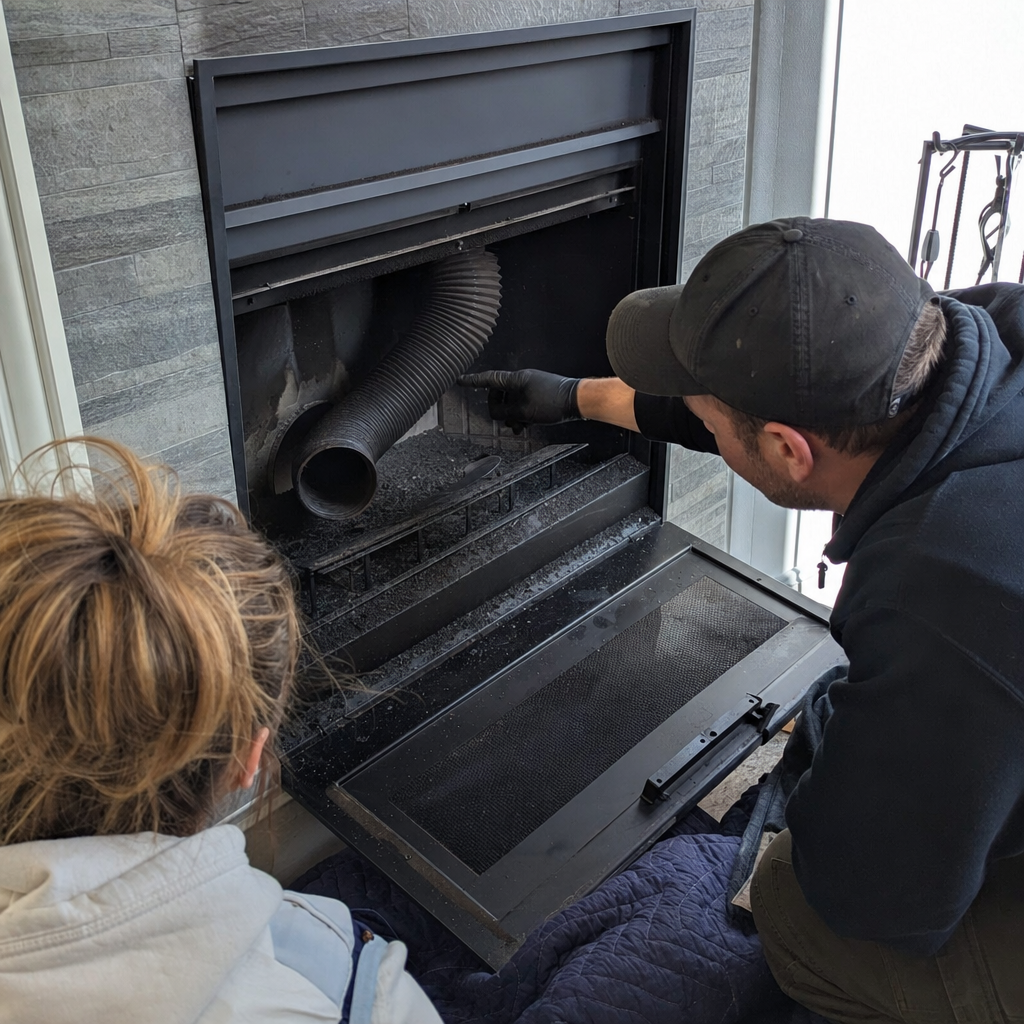
How Often Should You Clean Your Chimney in Buffalo, NY? Annually in Spring, Not Fall
Most chimneys in Buffalo need cleaning and inspection once per year, but the timing matters more here than nearly anywhere else in the country. We schedule the majority of our annual Chimney Cleaning & Sweep in Buffalo appointments for March through May — after the last hard freeze but before homeowners forget about their chimney until October. That spring window lets us clear a full season’s creosote buildup and catch the structural damage Buffalo’s freeze-thaw cycles inflicted between October and April.
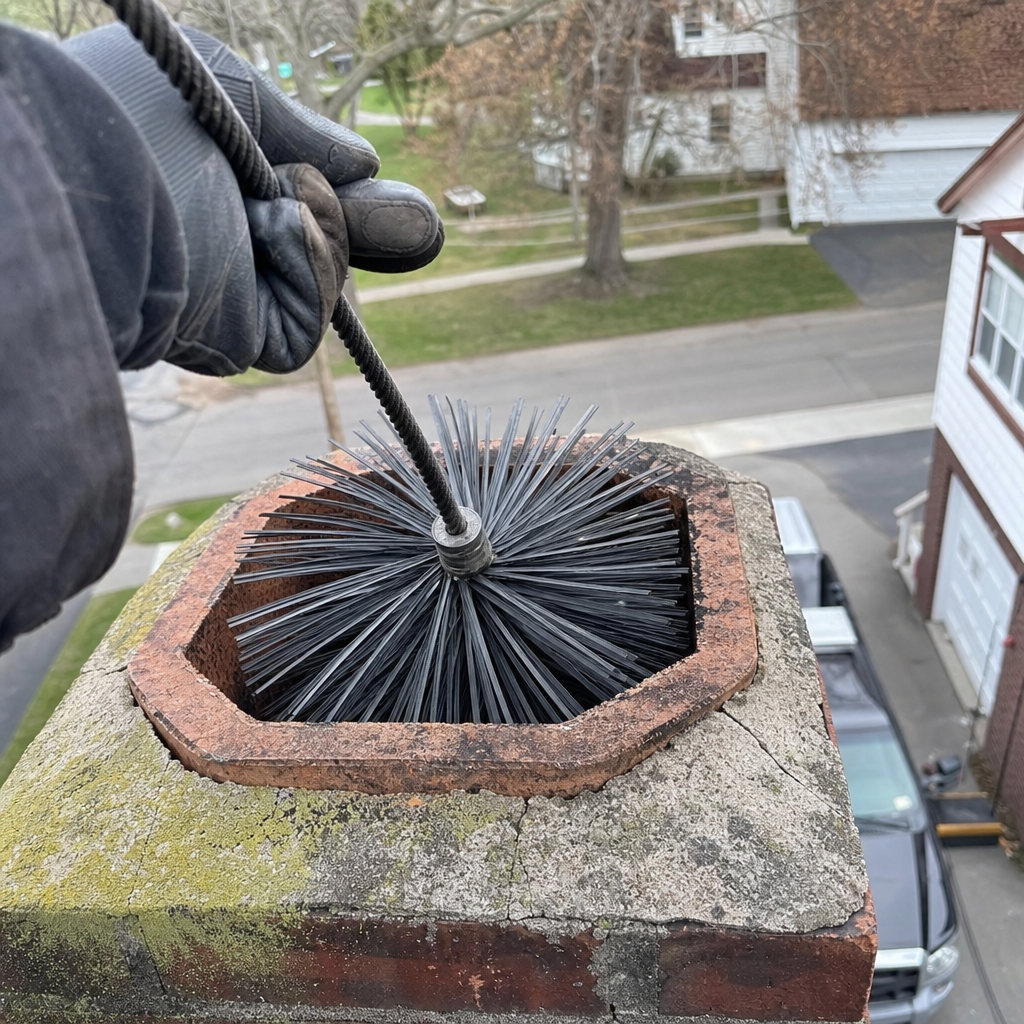
Call (833) 632-3568 to book a spring inspection, or read on to understand why Buffalo’s climate and housing stock change the standard national answer.
Why the NFPA’s “Once a Year” Guidance Only Tells Half the Story Here
The National Fire Protection Association’s NFPA 211 standard says chimneys, fireplaces, and vents should be inspected at least once annually, and cleaned as needed based on that inspection — which is why knowing the Signs your Chimney Needs Cleaning in Buffalo, NY matters. For most of the country, that’s a simple fall checklist item: book a sweep in September, burn clean through winter.
Buffalo breaks that model. Our position directly downwind of Lake Erie subjects pre-WWII masonry chimneys to among the most punishing freeze-thaw cycling of any major U.S. city. Wet lake-effect snow saturates mortar joints, which then refreeze — sometimes 80 to 100 times per season. A chimney that passed visual scrutiny in October can have open mortar joints, cracked crowns, and spalled brick by April that weren’t visible when the heating season started.
Here’s what we’ve found across 11 years and nearly 300 Buffalo-area jobs: the chimneys that go multiple years between Chimney Cleaning & Sweep services don’t just accumulate more creosote. They have structural damage that’s been progressing unchecked, often turning a $200 sweep into a $2,000+ rebuild because nobody caught the deterioration early.
Thomas Hernandez, our owner and lead technician, grew up on Buffalo’s West Side a few blocks from Delaware Park. His dad heated their childhood house with a wood stove, which is probably why a blocked flue feels personal — not just a service call. When he opens a flue in spring and finds mortar that’s turned to sand over the winter, he knows that homeowner almost certainly burned through another season with compromised masonry.
Buffalo Housing Stock: Why Your Chimney’s Age and Size Change the Frequency Answer
Buffalo’s peak building era ran roughly 1880 to 1930, leaving dense neighborhoods of brick Victorians, Queen Annes, and early-20th-century frame homes across the East Side, Elmwood Village, and South Buffalo. Most carry original multi-flue masonry chimneys built for coal furnaces, later converted to oil or gas. Those conversions left oversized flue liners for the new appliances — a mismatch that causes persistent draft problems, condensation, and accelerated What Is Creosote Buildup? (Buffalo, NY).
We’ve seen this pattern repeatedly: a homeowner in South Buffalo burns a modern gas insert through an 1890s coal-era flue, and the oversized liner can’t maintain proper draft temperature. Moisture condenses, mixes with combustion byproducts, and forms glazed creosote far faster than NFPA’s standard “one cord of wood” guidance would predict. For these systems, an annual inspection isn’t conservative — it’s the minimum. Some genuinely need a mid-season check, particularly if you’re burning daily from November through March.
Key variables that push Buffalo chimneys toward more frequent cleaning:
- Oversized coal-era flues serving modern appliances: Common across Buffalo’s pre-WWII housing stock; condensation-driven creosote accumulates faster than properly sized systems
- Daily wood-burning through Buffalo’s extended heating season: NFPA’s “per cord” guidance translates to every 1–2 seasons for typical Buffalo usage, not annually
- Previous chimney fire or partial blockage: Residual glazed creosote requires more frequent monitoring
- Visible moisture staining or efflorescence on exterior masonry: Signals active water intrusion that accelerates both structural damage and creosote formation
- Recent major lake-effect snow event with wind-driven snow entry: Requires immediate inspection before next use, regardless of annual schedule
The Lake-Effect Snow Factor: When Weather Trumps Your Calendar
After major lake-effect dumps — the kind that drop 2–3 feet of wet, heavy snow on Buffalo in 24 to 48 hours, with southtowns like Orchard Park, Hamburg, and West Seneca sometimes exceeding 150 inches annually — we regularly find flue openings and chimney caps packed solid with wind-driven snow and ice. This isn’t a maintenance schedule issue. It’s a blocked combustion path creating carbon monoxide backdraft conditions inside the home.
This failure mode is virtually unknown in most of the country, but it’s a recognizable seasonal pattern here, particularly on the lee faces of chimneys in the southtowns snowbelt. If you’ve had a major snow event and notice drafting problems, smoke backup, or your CO detector activating, that’s an immediate call — not a wait-for-annual-inspection situation.
We install professional-grade chimney caps from Gelco and Olympia Chimney specifically to mitigate this, but no cap is immune to the right combination of wind, wet snow, and temperature swing. After a storm, a visual check of your cap and flue opening from ground level (binoculars help) can catch obvious blockages. If you’re unsure, we’re happy to look — it’s a five-minute check that can prevent a hospital trip.
Wood-Burning in Buffalo: Translating “Per Cord” to Real Local Usage
NFPA 211 and the Chimney Safety Institute of America both note that wood-burning systems should be inspected after every cord of wood burned. For Buffalo’s long heating season — typically late October through mid-April, with shoulder-season fires common — that translates differently than in milder climates.
Most Buffalo wood-burning households we service burn 2–4 cords per season. Under strict interpretation, that would suggest two inspections annually. In practice, we find that a thorough spring cleaning and inspection after a typical 2–3 cord season catches the accumulation, while a fall “condition check” before lighting the first fire makes sense for heavy burners. We don’t upsell unnecessary visits — if your spring inspection shows minimal buildup and sound masonry, you’re set for the year. But if Thomas finds glazed creosote or moisture damage, he’ll tell you straight what the timeline should be.
If I wouldn’t let my own family light that fireplace, I’m going to tell you straight.
Gas Inserts and Fireplaces: The Hidden Creosote Problem
Buffalo homeowners with gas inserts sometimes assume “clean burning” means “no cleaning needed.” That’s a dangerous misconception we encounter constantly, especially in converted coal-era flues.
Modern gas appliances do produce less particulate matter than wood fires, but they produce significant water vapor. In an oversized flue — the norm in Buffalo’s older housing — that vapor cools before exiting, condensing on flue walls and mixing with trace combustion byproducts to form corrosive deposits. We’ve pulled surprising buildup from gas flues that hadn’t been inspected in three years, and the structural damage from that acidic condensation is often worse than creosote.
Annual inspection remains the standard for gas systems, with cleaning frequency determined by what we find. The spring timing is equally important: catching crown cracks and mortar deterioration before another season of acidic condensation accelerates the damage.
What Happens When You Skip Years: Thomas’s 11-Year Observation
After 11 years exclusively in chimneys — not as a general handyman who added sweeps, but as a single-trade specialist — Thomas has documented a clear pattern in Buffalo. The chimneys that go two, three, or more years between professional visits don’t simply have proportionally more creosote. They have:
- Crown cracks that have widened from hairline to structural, allowing water directly into the flue
- Spalled brick faces where freeze-thaw cycling has destroyed the protective hard layer
- Detached or deteriorated flue liners, often in the offset sections common in Buffalo’s multi-story Victorians
- Hidden fire damage from prior chimney fires the homeowner never knew occurred
The annual visit isn’t primarily about cleaning — though that’s important. It’s about detection. Buffalo’s climate ensures that small problems become large problems quickly. A $250 sweep and minor repair in spring becomes a $3,000 liner replacement with masonry rebuild when discovered three years later.
We use professional-grade materials — DuraFlex for liner replacements, HeatShield for crown and flue resurfacing — because Buffalo’s conditions destroy contractor-grade substitutes. When we repair a chimney in Elmwood Village or rebuild a crown in Hamburg, we’re specifying materials that can survive the next decade of lake-effect winters, not just look good on the invoice.
Spring vs. Fall: Why We Push Back Against “Standard” Scheduling
Most national chimney companies market heavily for fall appointments. It’s intuitive — clean before the burning season. But in Buffalo, fall cleaning has a critical limitation: you’re inspecting masonry that hasn’t yet faced the winter’s freeze-thaw assault.
Spring cleaning reverses that. We clear the accumulated creosote, then inspect masonry that’s just survived 80–100 freeze-thaw cycles, multiple lake-effect snow events, and months of thermal stress. Any damage is fresh and visible, not hidden under another season’s deterioration. Repairs can be scheduled during mild weather, materials cure properly, and you’re entering the next heating season with verified-sound structure.
Fall appointments make sense for one scenario: you’ve purchased a home in September and have no inspection history. In that case, we inspect for immediate safety and schedule the follow-up for spring to establish the true condition baseline.
Key Takeaways for Buffalo Homeowners
- Annual minimum: Every chimney in Buffalo needs professional inspection and cleaning at least once per year
- Optimal timing: March through May, after freeze-thaw damage is complete but before damage worsens through summer rain
- Wood-burners: After every 1–2 cords in our extended heating season; heavy users may need fall condition checks
- Gas systems in oversized flues: Don’t assume clean burning means no inspection — condensation damage is real
- Post-storm: Major lake-effect snow events can block flues; inspect before using if you suspect blockage
- Pre-WWII homes: Coal-era flue sizing creates unique risks that may justify more frequent professional evaluation
FAQs
An Affordable Chimney Cleaning & Sweep in Buffalo, NY typically runs $200–$350 for a single-flue system, with multi-flue or heavily glazed creosote situations running higher. Pre-WWII homes with complex flue configurations or accessibility challenges may require additional time. We provide upfront pricing before starting any work — no surprise add-ons after we’re on your roof. Call (833) 632-3568 for an exact quote; estimates are free.
Homeowners can perform basic fireplace maintenance like ash removal and visual cap checks, but professional chimney cleaning requires specialized equipment and trained evaluation that DIY kits don’t provide. In Buffalo specifically, the critical value isn’t just creosote removal — it’s detecting freeze-thaw masonry damage, liner deterioration, and proper draft function that require a trained eye and camera inspection. We’ve found cracked crowns and detached liners that homeowners missed for years because the damage wasn’t visible from the firebox. For safety and insurance purposes, a CSIA-certified professional sweep is the standard.
Multiple years without inspection in Buffalo’s climate virtually guarantees progressive structural damage alongside creosote accumulation. We’ve opened chimneys that appeared functional from the firebox but had detached liners, significant mortar loss, or previous fire damage hidden from view. The risk isn’t just chimney fire — it’s carbon monoxide infiltration from compromised flue integrity, water damage to surrounding structure from crown failure, and accelerated deterioration that turns maintainable masonry into rebuild territory. Annual contact is detection, not just cleaning.
Watch for these Buffalo-specific warning signs: visible creosote flakes in the firebox, smoke backing up into the room, a strong tar-like odor during humid weather, moisture stains on interior walls near the chimney chase, or any drafting issues after a major snowstorm. If you burn wood daily, monitor your consumption — at 2+ cords per season, you’re approaching the threshold where mid-season evaluation makes sense. When in doubt, a quick call to (833) 632-3568 gets you a straight answer without pressure.
If you’d rather have it looked at, Titan Chimney Cleaning Greater Buffalo offers a no-pressure assessment — call (833) 632-3568 for a free estimate and straight talk about what your chimney actually needs.
Written by Thomas Hernandez, Owner & Lead Technician at Titan Chimney Cleaning Greater Buffalo, serving Buffalo, NY.