
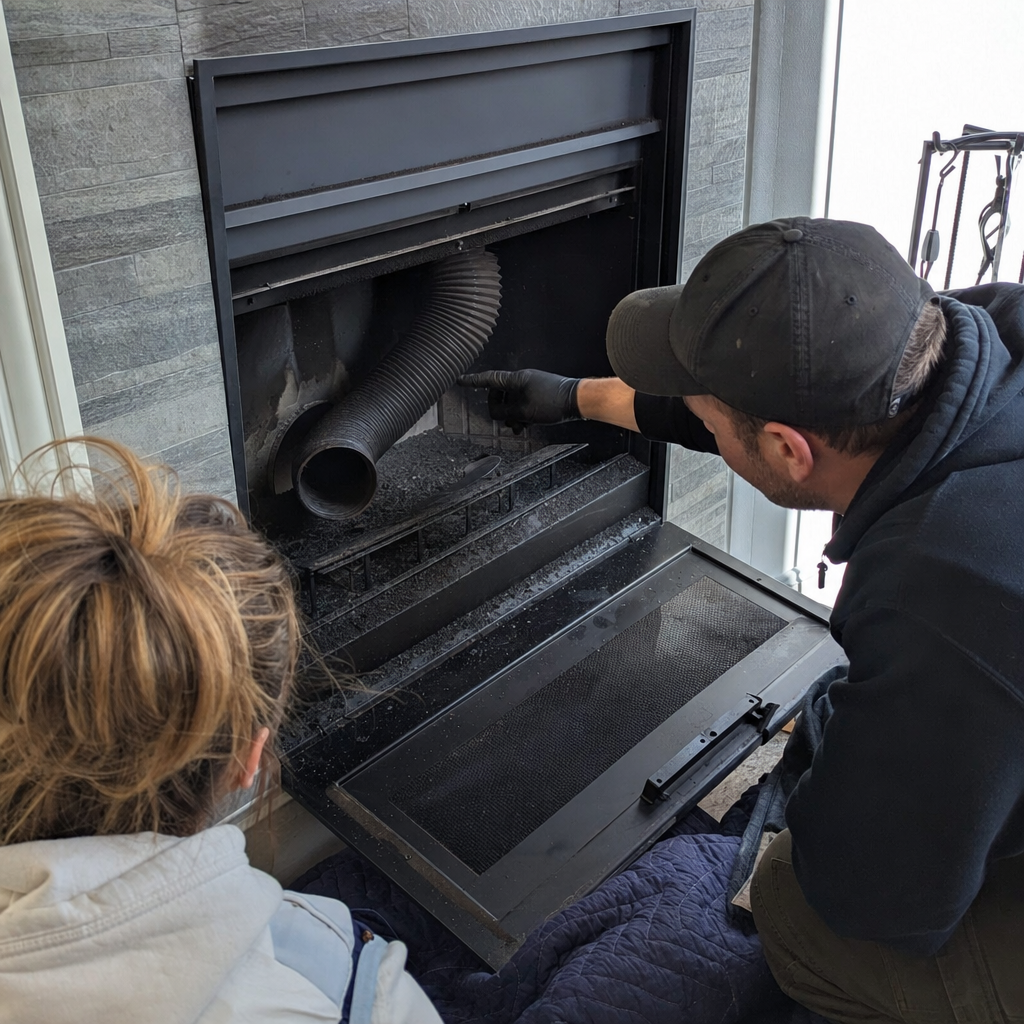
Signs Your Chimney Needs Cleaning in Buffalo, NY — From the Firebox to the Crown
The most reliable signs your chimney needs cleaning are visible creosote buildup (glossy black or flaky deposits above the firebox), smoke entering your living space during fires, and persistent musty or tar-like odors — but in Buffalo’s pre-WWII housing stock, the dangerous signs are often structural: white efflorescence streaks on exterior brick, frost-heaved cap stones, and dampness at the firebox base after winter indicate that freeze-thaw damage has opened water entry points that make combustion unsafe. If you’re seeing any of these warning signals, call Titan Chimney Cleaning Greater Buffalo at (833) 632-3568 for a same-week inspection — estimates are free, and Thomas Hernandez handles every job personally.
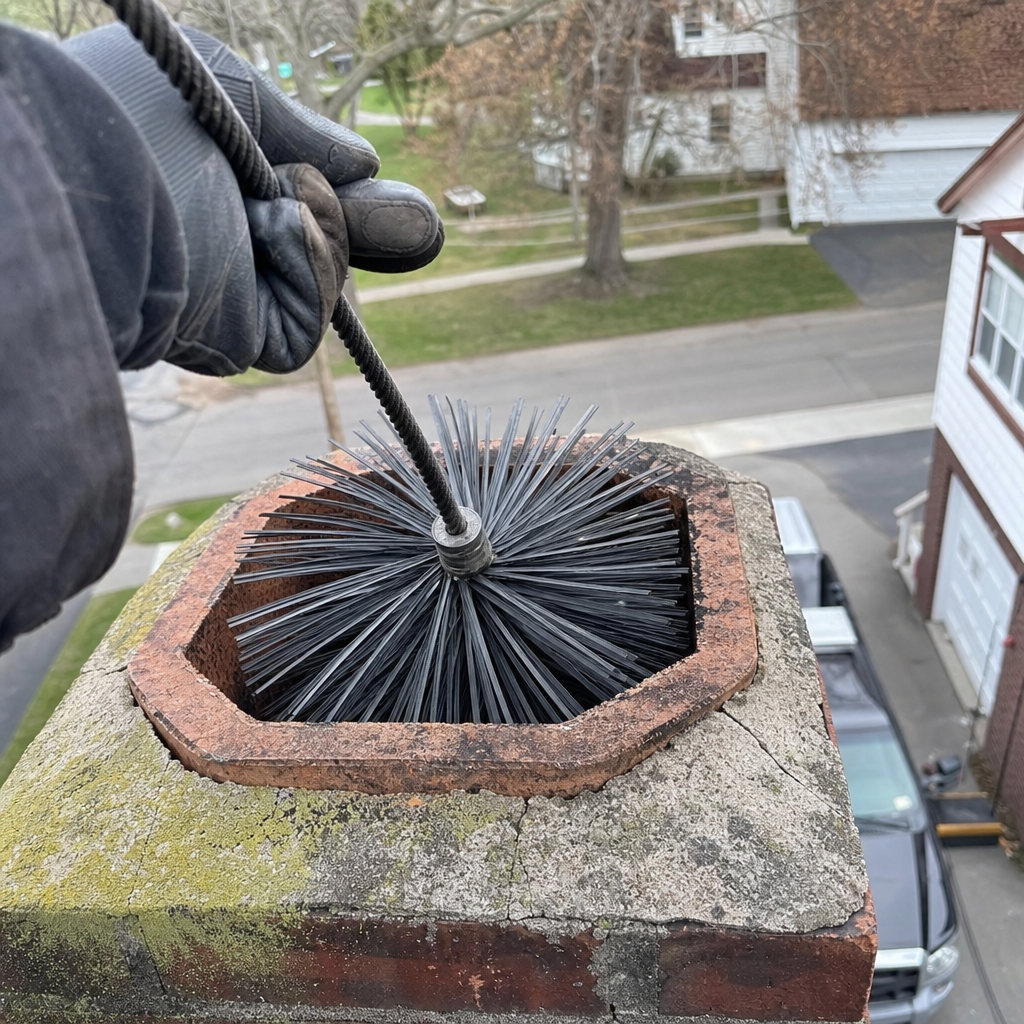
The Signs Thomas Looks For First — And What Most Homeowners Miss
The oily smell and the dark buildup inside the firebox — those are obvious. What Thomas Hernandez looks for on a Buffalo chimney that most homeowners walk past every day is something else entirely.
Growing up on Buffalo’s West Side, a few blocks from Olmsted’s Delaware Park, Thomas learned early that his dad’s wood stove demanded respect. A blocked flue wasn’t an abstract hazard — it was the thing that could send his family into the night. That upbringing still shapes how he reads a chimney today. After 11 years running Titan Chimney Cleaning across Greater Buffalo, he’s developed a seasonal diagnostic rhythm that starts with what Buffalo’s climate did to the masonry last winter, not just what creosote accumulated in the flue.
Here’s what separates a routine cleaning from an urgent safety issue in this market:
- White efflorescence on exterior brick — Those chalky mineral streaks mean water is migrating through the masonry, dissolving salts, and depositing them on the surface. In Buffalo’s 80–100 annual freeze-thaw cycles, this signals active water intrusion that’s accelerating mortar deterioration and compromising the flue’s structural integrity.
- Frost-heaved or shifted cap stones — After a typical Buffalo winter with 2–3 feet of wet lake-effect snow in a single event, concrete and stone crowns crack and shift. A cap that’s no longer seated properly funnels water directly into the flue system, where it mixes with creosote to form corrosive acids.
- Open horizontal mortar joints or vegetation growth — Moss or small plants in mortar beds mean sustained moisture retention. In Buffalo’s southtowns — Orchard Park, Hamburg, West Seneca — where annual snowfall exceeds 150 inches, this damage progresses faster than homeowners expect.
- Dampness or staining at the firebox base — Water pooling where the firebox meets the hearth indicates either a failed crown, deteriorated flashing, or compromised chimney shoulder. This is never “just a cleaning issue,” but it’s often discovered during a thorough sweep when Thomas inspects from firebox to cap.
These structural warnings matter because creosote buildup and water damage travel together in Buffalo chimneys, which is why best chimney cleaning and sweep in Buffalo, NY addresses both issues together. An oversized flue — common in East Side Victorians, Elmwood Village Queen Annes, and South Buffalo frame homes built during the 1880–1930 boom — runs cooler than designed, condensing more creosote while also allowing more moisture to linger. The cleaning need and the structural problem are coincident, not separate.
The Standard Warning Signs — And Why They Hit Harder in Buffalo’s Old Housing Stock
None of this means the classic symptoms don’t apply. They do — but they often manifest differently here because of how Buffalo’s chimneys were originally built.
Glossy black buildup in the firebox throat. Stage 3 glazed creosote — shiny, tar-like, and nearly impossible to remove with standard brushes — forms when flue gases cool too quickly. In Buffalo’s converted coal chimneys, the flue is frequently oversized for modern gas inserts or oil appliances. The slower draft keeps temperatures lower, accelerating glaze formation. Thomas regularly finds ¼-inch or thicker deposits in chimneys that “looked fine” from the outside.
Smoke in the room during operation. This can indicate blockage, but in Buffalo’s pre-WWII housing, it often points to the oversized-flue problem: too much volume for the appliance to heat, too little velocity to establish proper draw. Smoke spillage on startup is a signature complaint in homes from Allentown to North Buffalo, and it rarely resolves without addressing both cleaning and flue sizing.
Fires that start slowly or won’t stay lit. Cold air descending an oversized, uninsulated masonry flue — especially one on an exterior wall common in Buffalo’s older construction — can extinguish a fire before it establishes. If you’re using more kindling than usual or finding that logs smolder rather than burn, the flue may be partially obstructed by creosote, debris from a deteriorated liner, or last winter’s wind-driven snowpack.
Persistent musty or tar-like odors. In humid Buffalo summers, creosote deposits absorb moisture and off-gas. But a musty smell that intensifies after rain or snowmelt suggests water intrusion compounding the organic buildup — the combination Thomas finds most often in spring inspections across the city.
The Lake-Effect Danger No Checklist Mentions
After major lake-effect dumps, chimney sweeps in Buffalo regularly find flue openings and chimney caps packed solid with wind-driven snow and ice. It’s a failure mode virtually unknown in most of the country but a recognizable seasonal pattern here.
If you ran your furnace or fireplace during or immediately after a major snowstorm and noticed unusual backdraft, carbon monoxide alarm activity, or a persistent headache while the appliance was operating, the cause was likely wind-driven snow packing the flue. The lee faces of chimneys — particularly in the southtowns snowbelt — catch blowing snow that melts slightly, refreezes, and forms an ice dam blocking exhaust gases.
This isn’t a “cleaning” problem in the traditional sense, but it’s discovered during inspection, and it demands immediate attention before the next use. Thomas has pulled solid ice columns from flues in Hamburg and West Seneca that homeowners didn’t know existed until their CO detector sounded.
When Thomas does a Chimney Cleaning & Sweep, he’s not just looking at the flue — he’s looking at everything visible from the firebox to the cap. That’s why his inspection catches structural signs that a crew following a cleaning checklist will miss. If I wouldn’t let my own family light that fireplace, I’m going to tell you straight.
What Happens During a Proper Buffalo Chimney Inspection
Thomas approaches every job with the understanding that Buffalo’s chimneys are systems under siege. His inspection protocol reflects that reality:
- Interior flue evaluation — Visual and camera inspection for creosote stage, liner condition, and obstruction (debris, animal nests, ice)
- Firebox and smoke chamber assessment — Checking for spalling brick, deteriorated mortar, and water staining that indicates hidden leaks
- Exterior masonry survey — Efflorescence mapping, mortar joint evaluation, and identification of freeze-thaw damage from crown to shoulder
- Cap, crown, and flashing inspection — Verifying water-shedding integrity; noting shifted or cracked elements for repair
- Draft performance testing — Measuring actual draw against appliance specifications, particularly critical in oversized flues
When repair is needed, Titan works with professional-grade materials — HeatShield for refractory resurfacing, Gelco and Olympia Chimney for caps and liners, Famco for ventilation solutions. These aren’t contractor-grade substitutes; they’re the products Thomas specifies because he’s seen how they perform through Buffalo’s winters.
Key Takeaways: When to Schedule Cleaning vs. When to Stop Using the Fireplace
- Schedule cleaning soon: Visible creosote, mild odor, slower fire starts, or it’s been 12+ months since last service
- Schedule urgently: Smoke in living space, CO alarm activity during operation, or suspected blockage after snowstorm
- Stop using and call immediately: Damp firebox, visible exterior damage, or any sign of structural compromise — combustion in a compromised chimney can accelerate deterioration or cause fire spread
FAQs
An affordable chimney cleaning and sweep in Buffalo, NY typically runs $180–$280 for a single-flue system, with multi-flue or heavily glazed creosote situations ranging higher. Structural repairs, liner work, or crown rebuilds are quoted separately after inspection. Call (833) 632-3568 for an exact quote — estimates are free, and Thomas handles every assessment personally.
Basic brush kits can remove light, flaky creosote, but they won’t address glazed deposits or diagnose structural issues — and in Buffalo’s freeze-thaw climate, the structural problems are often the urgent ones. Professional inspection with proper camera equipment and masonry knowledge is how you catch the efflorescence, mortar degradation, and crown damage that DIY cleaning misses entirely. If you’re not confident evaluating brick and mortar condition from a ladder, hire a professional — nearly 300 homeowners have trusted Titan Chimney Cleaning with this call.
The National Fire Protection Association recommends annual inspection; cleaning frequency depends on use and fuel type. In Buffalo’s climate, Thomas advises annual inspection for all wood-burning systems and any gas or oil venting through masonry, because the freeze-thaw cycle can create new damage even in lightly used chimneys. Heavy wood burners (3+ fires weekly October–March) often need mid-season attention.
Crown repair with professional-grade resurfacing products like HeatShield typically costs 40–60% less than full crown reconstruction, but only if caught before freeze-thaw damage compromises the underlying masonry. In Buffalo’s climate, a cracked crown left through one winter often becomes a rebuild by spring. Thomas evaluates crown condition during every sweep and will recommend repair when it’s viable — one company, full chimney means you’re not getting a sales pitch for unnecessary reconstruction.
If you’d rather have it looked at, Titan Chimney Cleaning Greater Buffalo offers a no-pressure assessment — call (833) 632-3568 and Thomas will show up personally, inspect from firebox to cap, and give you a straight answer on what you’re dealing with.
Written by Thomas Hernandez, Owner & Lead Technician at Titan Chimney Cleaning Greater Buffalo, serving Buffalo, NY.